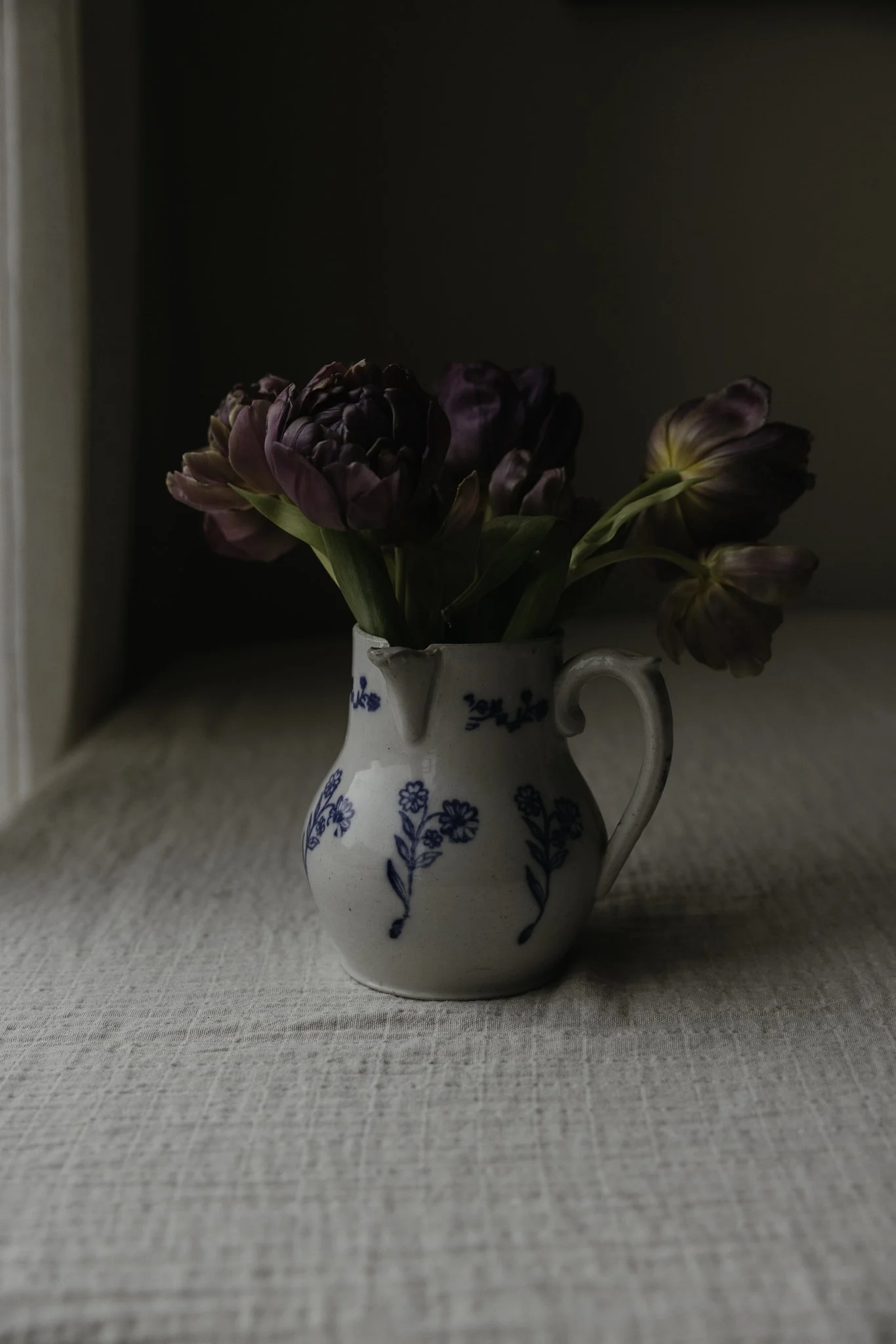
The Field Guide series explores the materials, objects, and traditions that shape the well-kept home — offering a closer look at the things that quietly accompany our daily lives.
The flea market at Vanves begins before the city is fully awake.
Vendors arrive in the early morning, unpacking their vans wooden crates and unwrapping their bundles along the hushed streets of the 14th arrondissement. Tables slowly fill with objects that have lived long lives — worn pottery bowls, stacks of hand-embroidered linens, glasses, small oil paintings softened by time, and kitchen tools that have passed through generations of use.
This is one of the places we frequent when sourcing antiques for Hawthorn.
What we look for are not pristine objects, but the opposite, things shaped by years of living. A wooden mortar & pestle worn smooth by many hands & countless meals. A linen tea towel softened by decades of washing. A ceramic bowl whose glaze carries the irregularities of the hand that made it. These are objects that have stood the test of time.
The Beauty of the Well-Used
There is a particular beauty, a weight of remembrance in objects that have been used daily. The handle of a copper pot darkens where it has been held. A linen cloth grows softer with every wash. Oil paintings develop a gentle patina that brings warmth and depth to the rooms they inhabit.
Unlike many contemporary goods, these materials were made to endure. Wood, linen, iron, clay, copper each one improves through use rather than deteriorating. When we walk the aisles at Vanves, we are seeking for these materials and listen to the stories they carry.
Objects That Remember
At a flea market like Vanves, objects reveal their past through touch.
A wooden spoon, darkened and smooth, speaks to countless meals prepared in the quiet rhythm of daily life. Linen towels show faint monograms stitched by hand reminders that household goods were once made carefully and expected to last. Can you feel the story as your hand passes over the well worn rim of a pottery bowl? The hands that mixed, and made, and brought a nourishing meal to the table. The hearts and soul that made it.
These pieces hold something of the folk ways of the past: the everyday practices that once shaped life in the home. Meals were cooked slowly from simple ingredients. Textiles were washed, dried in the open air, and mended when they wore thin. Tools were cared for so they could continue serving their purpose year after year. The objects we find here were not designed for novelty or replacement. They were made to accompany life over time.
French Pottery
Among the first things that catch our attention are ceramics. Stoneware comes from the Earth and grounds us. In French kitchens, the pottery used to make, tends to be simple and deeply functional but endures— mixing bowls with generous curves, glazed crocks, and earthenware vessels that once held cream, preserves, or herbs from the garden.
To me, their appeal lies in their honesty and integrity. Objects not meant as decoration alone; they were tools of the kitchen, vessels shaped for everyday use, for folks to pour into. Today, these pieces they continue to serve that purpose faithfully.
Linen with a Past
Stacks of linen appear throughout the market — tea towels, tablecloths, grain sacks, and household textiles that have already lived decades of life. Linen has long been one of the most enduring materials used in the home. Stronger than cotton and naturally antibacterial, it softens over time while maintaining its strength. The pieces we choose are those that still feel generous in their durability — fabrics ready to continue their life around the table or in the kitchen.
Oil Paintings and Atmosphere
Another treasure often found leaning against market stalls are small oil paintings. Landscapes, still lifes, and portraits, quickly becoming my favorite foraged finds, bring a sense of atmosphere to a home in a way mass-produced prints rarely can. The brushwork, softened colors, the personality, and slightly aged varnish add depth, warmth, and soul to a space.
Lessons in Slowness
There is a quiet instruction contained in these objects. A heavy ceramic mixing bowl suggests the patience of baking bread by hand. A linen cloth reminds us that fabrics soften slowly through washing and use. A copper pot, polished and repolished over many years, reflects the care once given to the tools of the kitchen.
They point toward a slower rhythm of living — one where tending to the objects of daily life was simply part of the day’s work. Their beauty is not static but evolving, deepening with every season of use.
The Beauty of Continuity
Antiques remind us that the most sustainable objects are often the ones that already exist. Made from natural materials and designed to last for decades, they were meant to be repaired rather than replaced. By bringing them into our homes today, we extend their life and reduce the need for new production.
More than that, they create continuity — a quiet connection between past and present. A bowl made fifty or a hundred years ago can still hold fruit on a kitchen table today. A linen towel woven decades ago can still dry dishes after supper. A small oil painting that once hung in a French home can bring warmth and atmosphere to another room far away.
Bringing Them Home
By early afternoon, the market and tables begins to thin. Vendors wrap the remaining objects in paper and cloth as the streets gradually return to their usual rhythm. The pieces we bring home in my uncle’s trolley from Vanves will eventually find their place in kitchens, dining rooms, and living spaces once again; continuing the long life they were made for.
Perhaps this is what makes them feel so meaningful. These objects do not simply decorate a home. They remind us of the many ways to live within it; a little more slowly, a little more attentively, and with a deeper sense of care for the things that accompany our daily lives.
Objects from This Trip