 Image 1 of 5
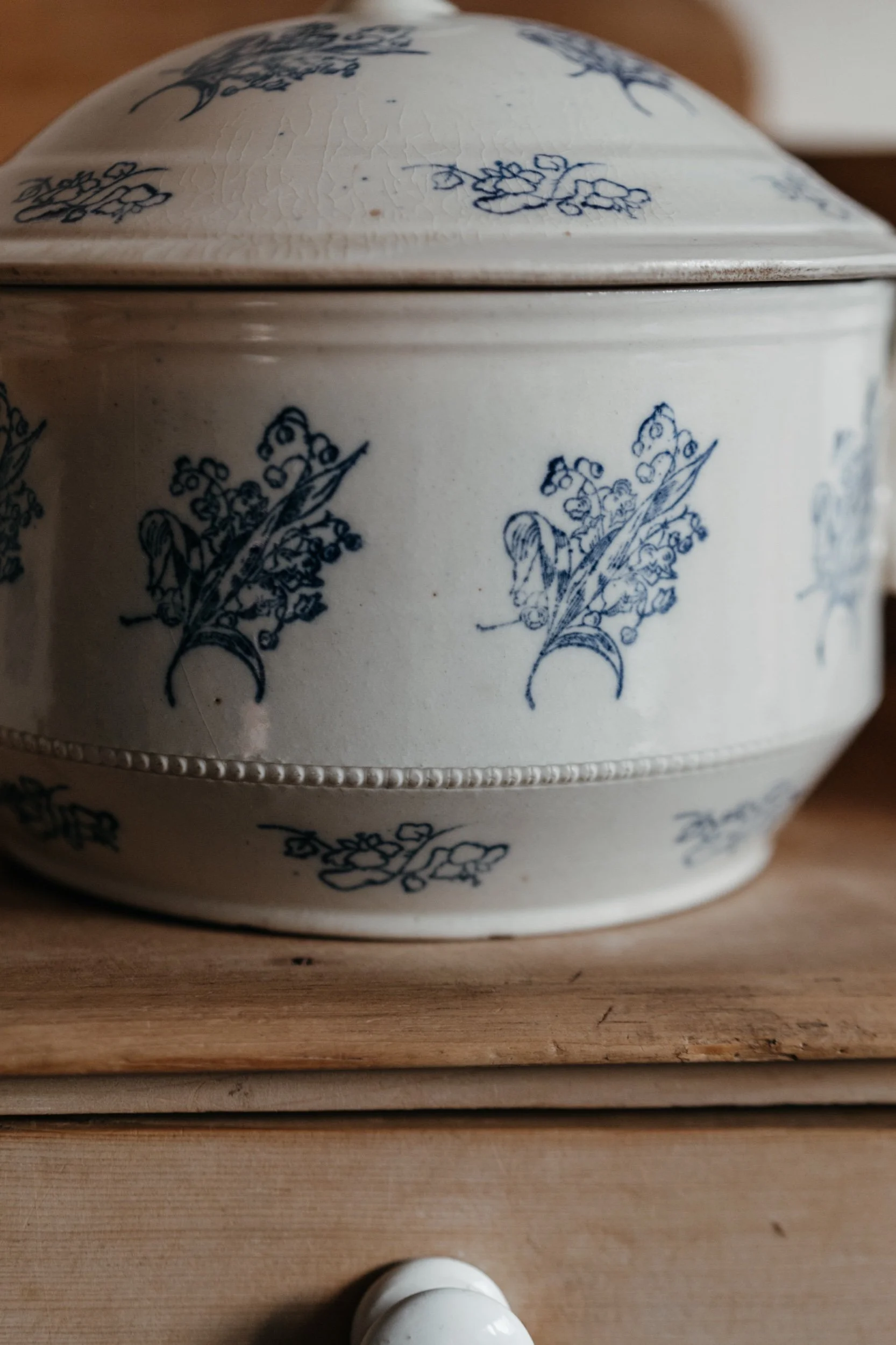 Image 2 of 5
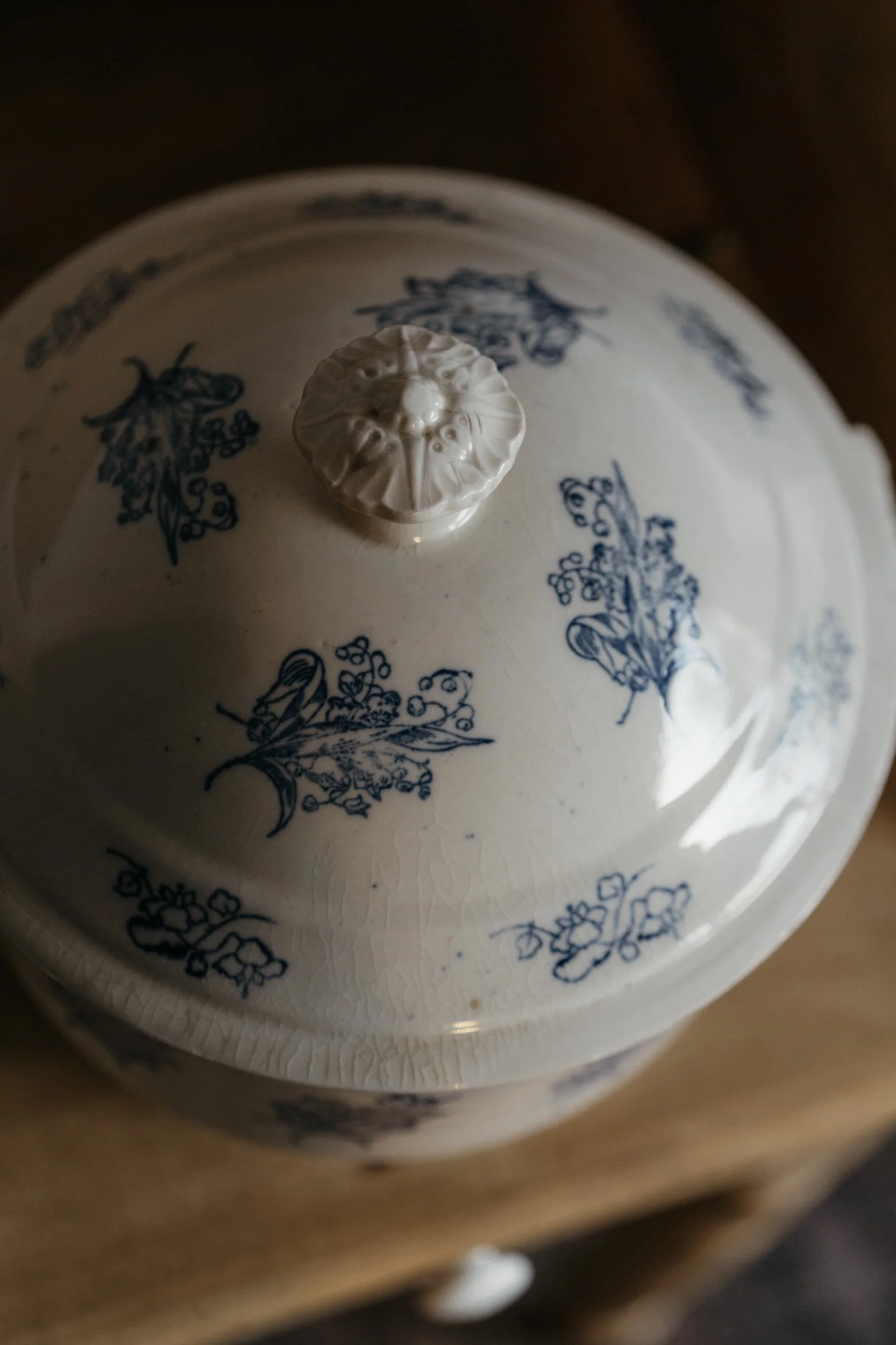 Image 3 of 5
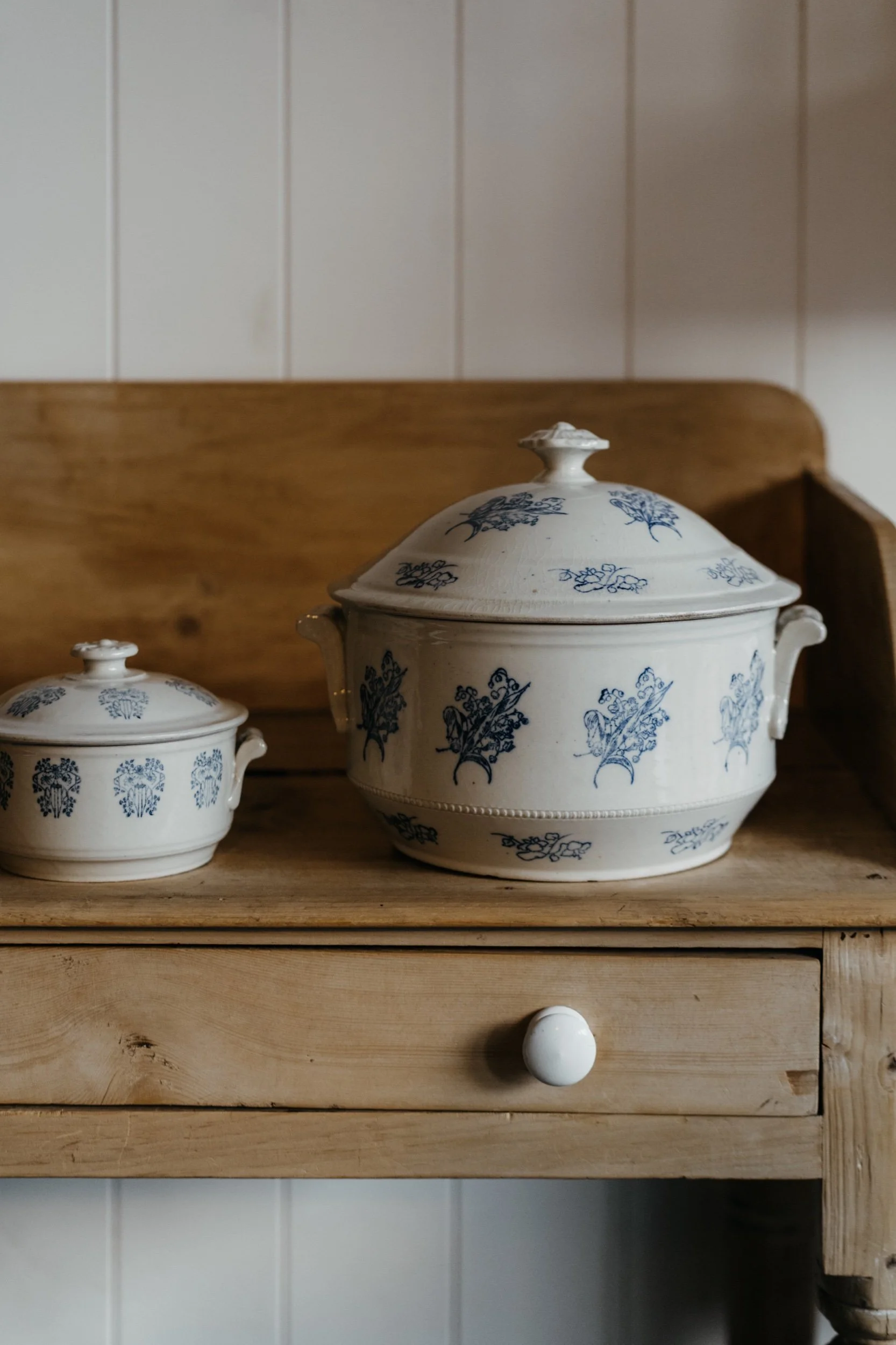 Image 4 of 5
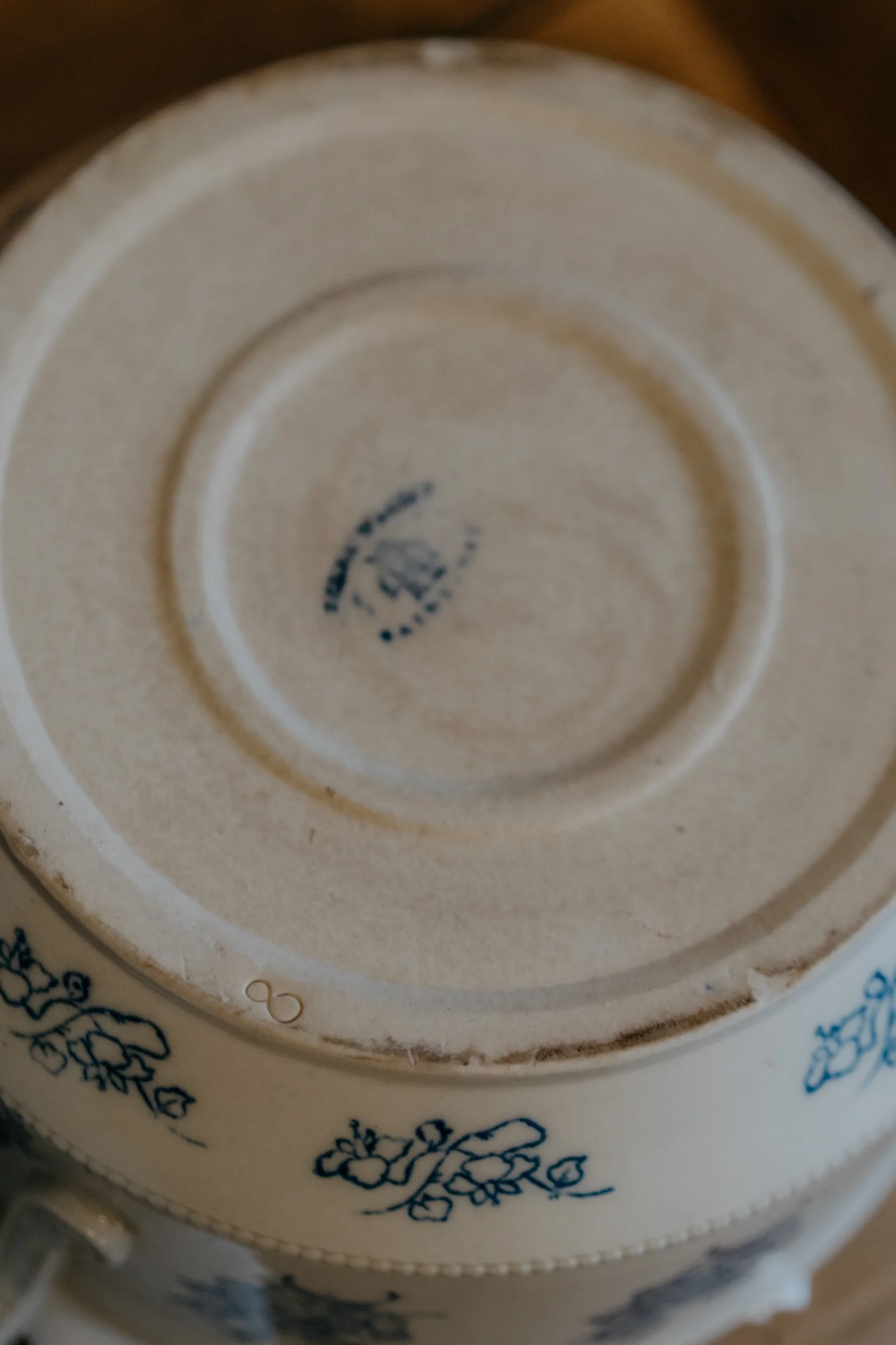 Image 5 of 5
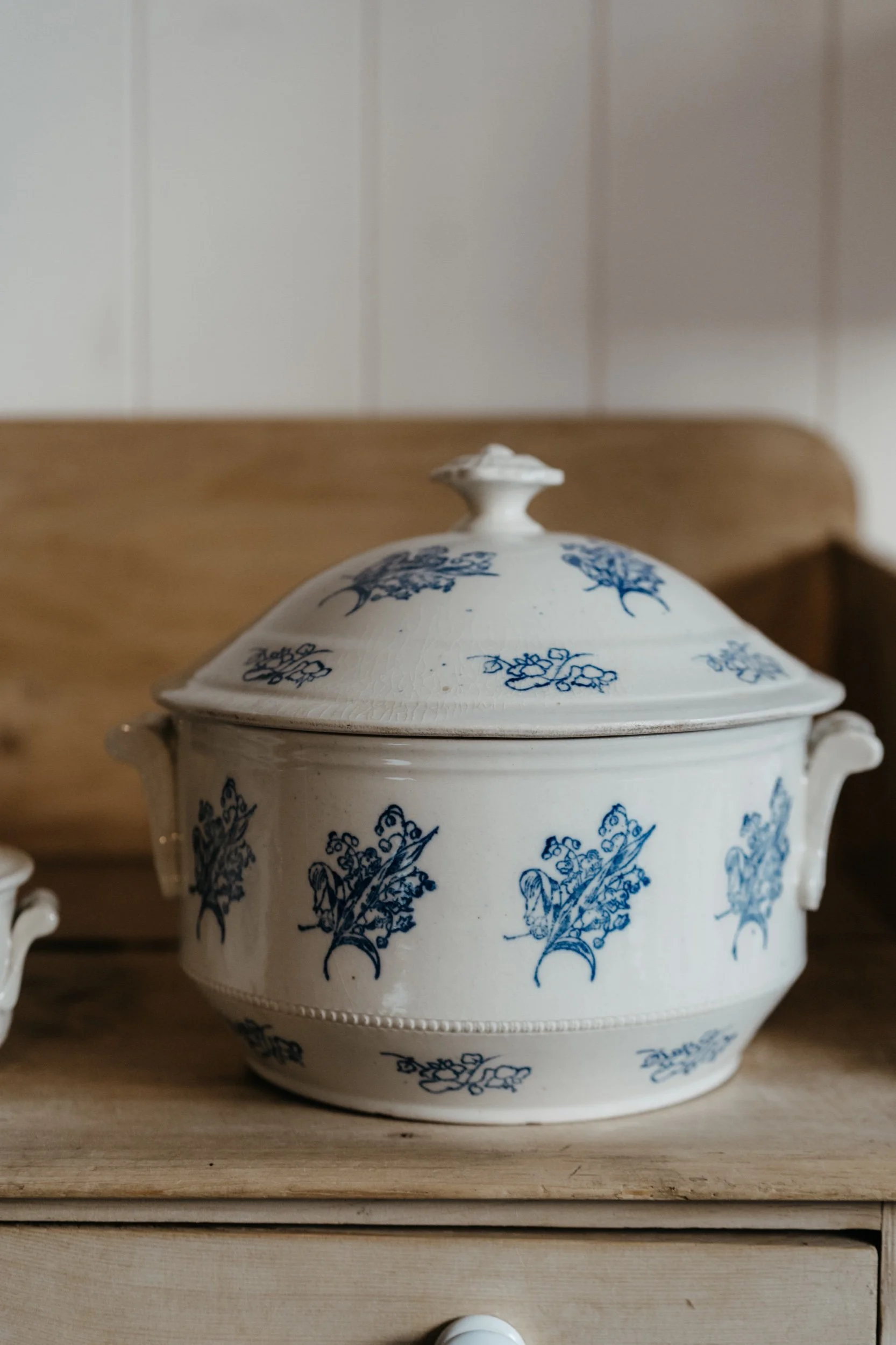
Made for the heart of the French country kitchen, this generous Saint-Uze stoneware soup tureen carries all the honest charm of traditional provincial pottery.
Produced in the village of Saint-Uze in southeastern France, these substantial kitchen vessels were made throughout the 19th and 20th centuries, valued for their sturdy construction and ability to withstand the everyday demands of farmhouse life.
With its thick-walled form and wonderfully practical proportions, a tureen of this kind would once have found its place at the centre of the dining table, filled with a hearty seasonal soup, a slow-cooked stew or something freshly prepared from the garden. Beautifully utilitarian rather than overly decorative, it speaks of a time when kitchen objects were made to be used, kept and passed along.
Today, its appeal is every bit as much in its decorative presence. I love the thought of it sitting on an old farmhouse table, perhaps filled with gathered branches, or simply left to stand on its own amongst a collection of well-loved French pottery.
An enduring piece of French kitchen history, with a lovely sense of simplicity and permanence.
Condition: Wear consistent with age and use.