
 Image 1 of 4
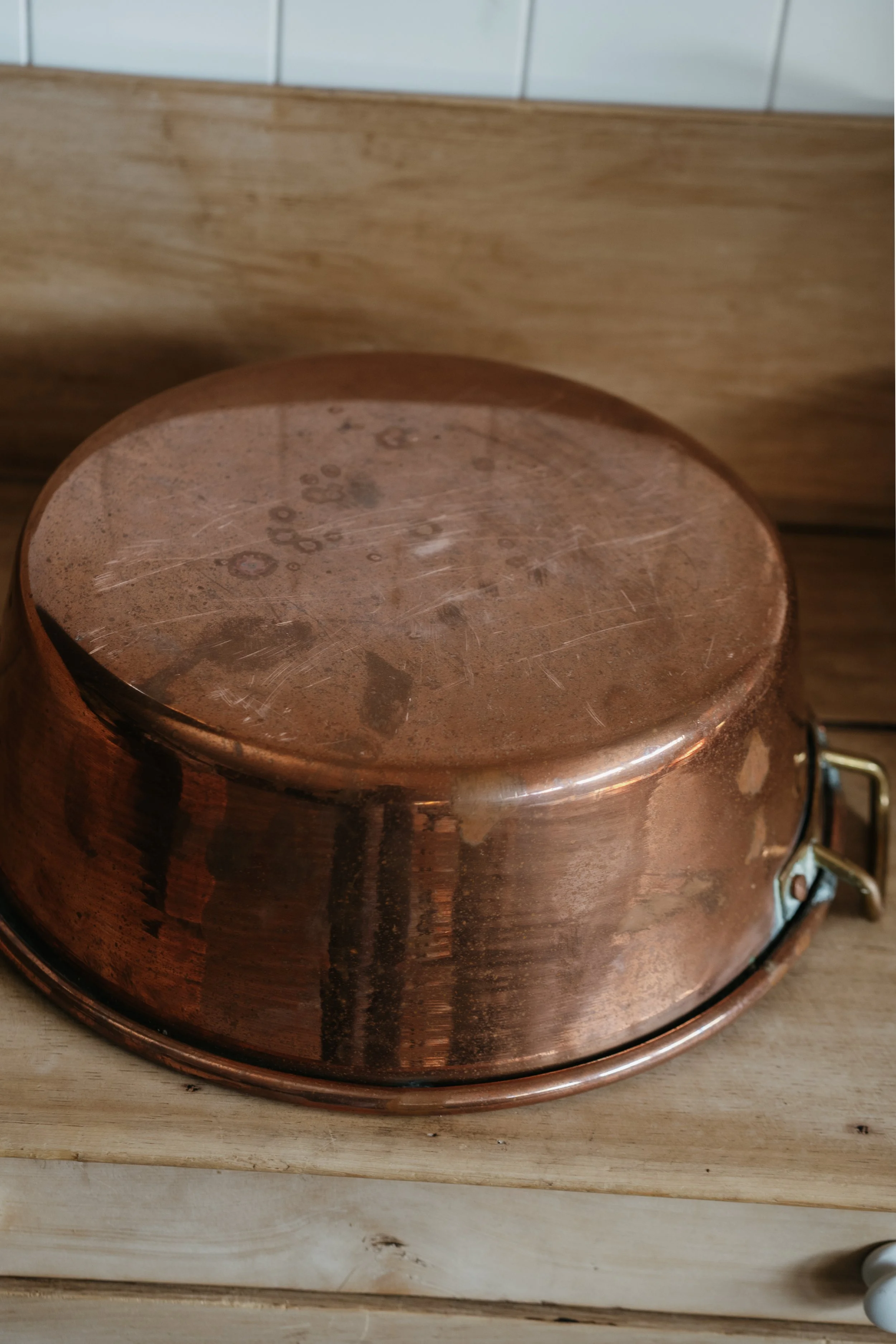 Image 2 of 4
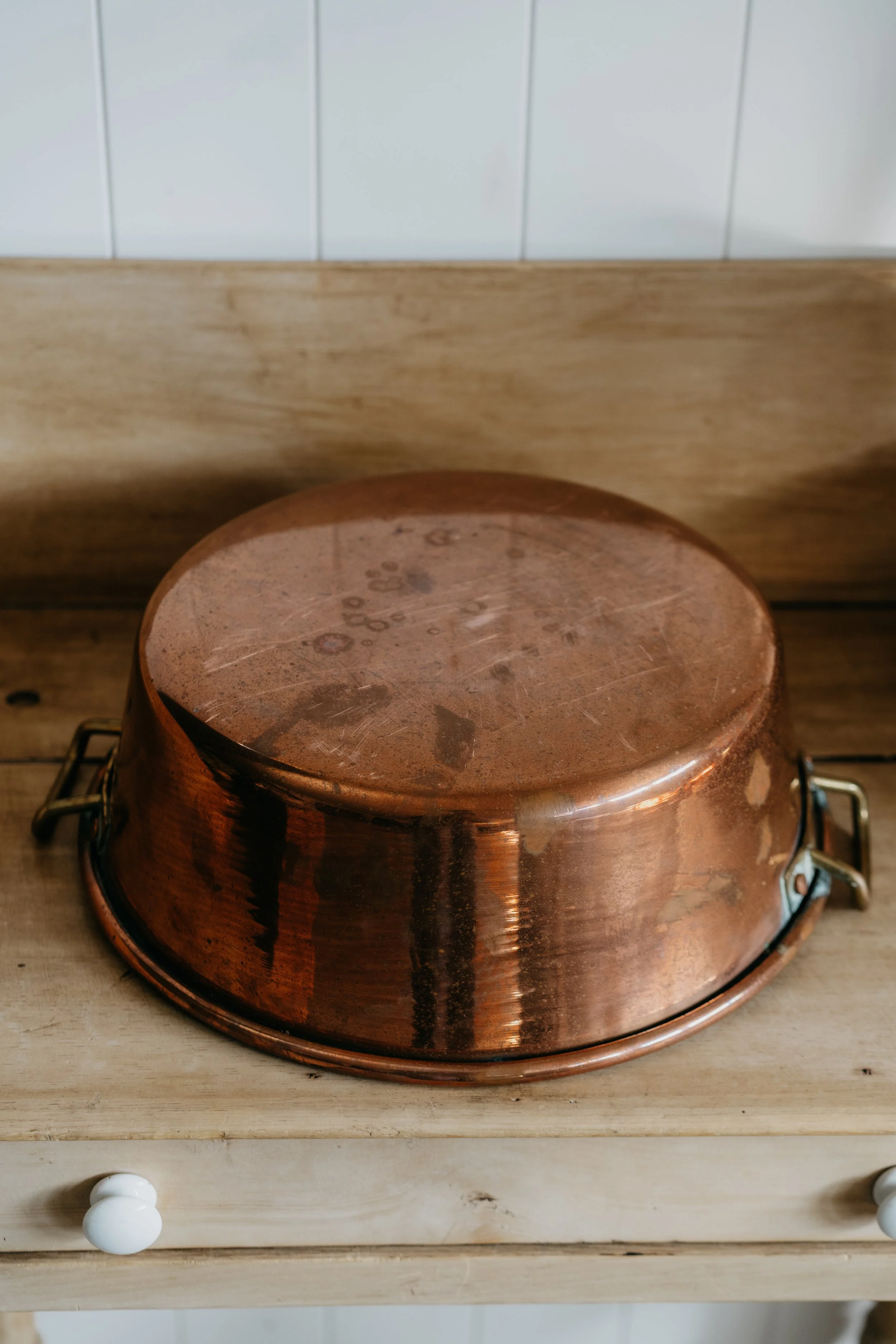 Image 3 of 4
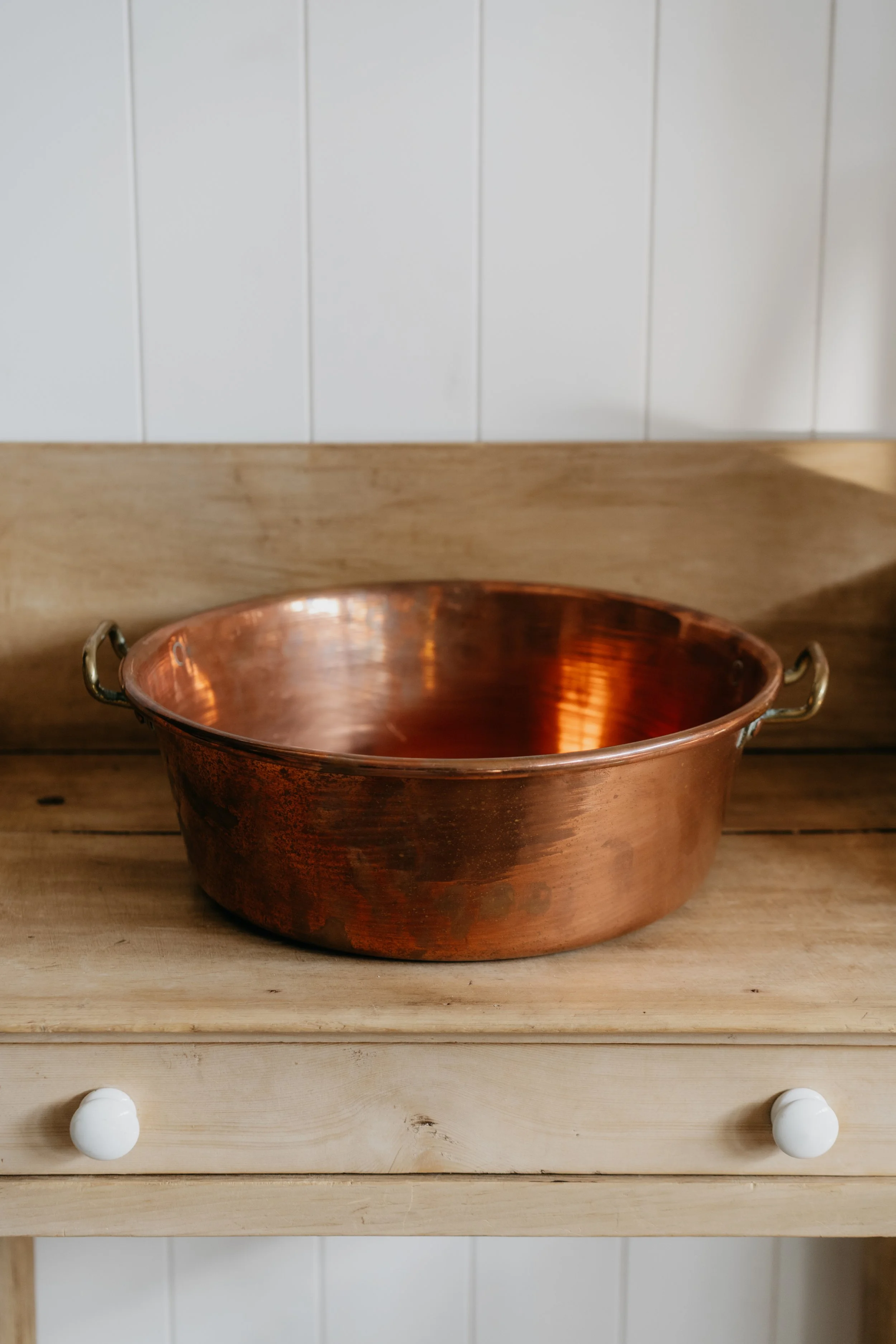 Image 4 of 4
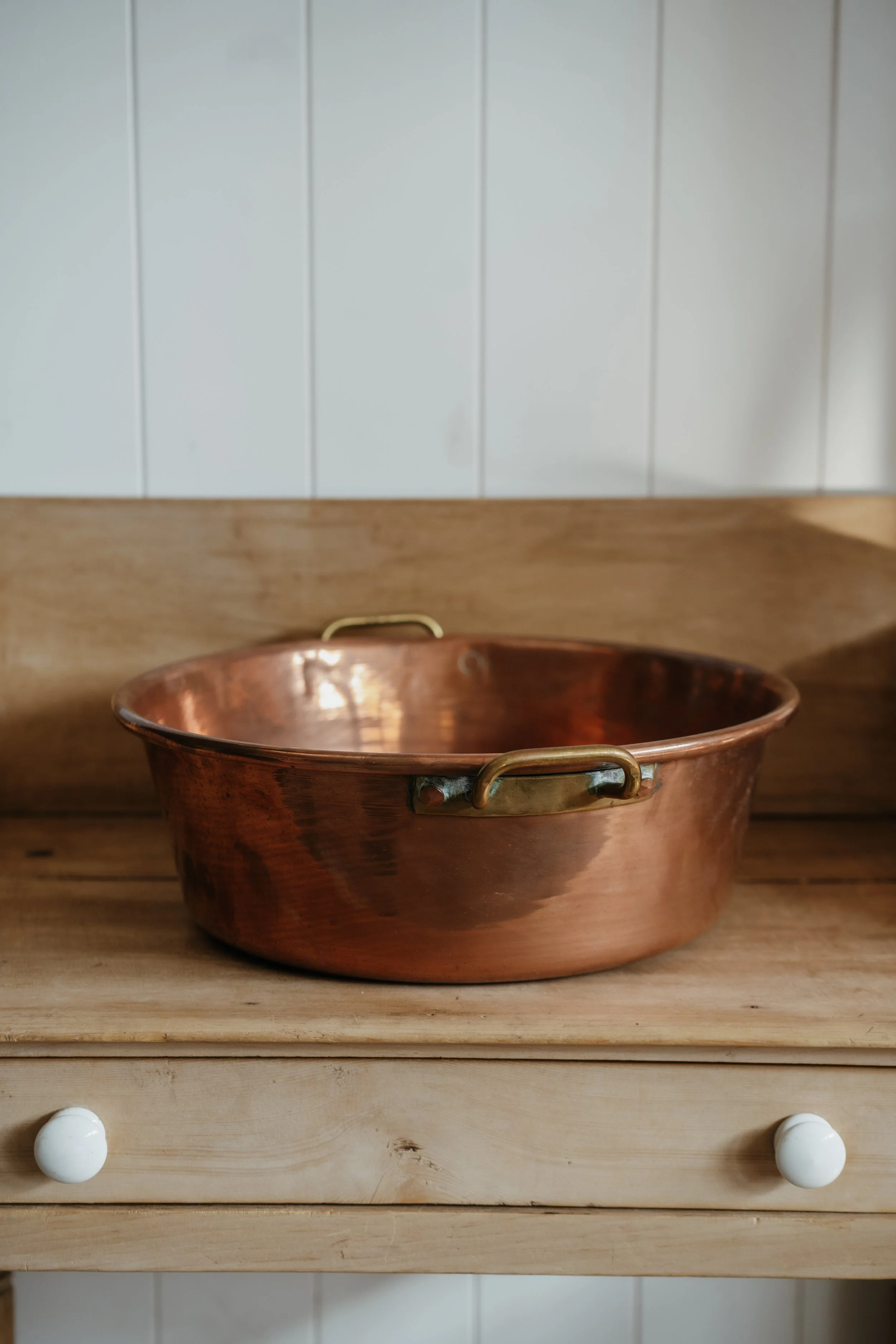
This is the sort of find brings rich story into a home. A generous copper pan from early 20th‑century France, its two original brass handles fastened with robust rivets that speaks of daily use and lasting care. It was clearly treasured: the copper has a warm, lived-in patina, dents and tiny hammer marks that read as history rather than wear. Remarkably sound for its age.
What it was made for: farmers’ kitchens and village coppersmiths. In places like Villedieu‑les‑Poêles, artisans hammered thick sheets of copper into these wide pans by hand. The design is purposeful — a broad open top to let steam escape quickly, thick metal to distribute heat evenly, and stout brass handles for heft and lift. These pans were used for boiling fruit and sugar into jam and preserves, skimming cream from milk, workhorses of autumn harvests when families and commercial kitchens put food up for winter.
Why it matters now: heavy steel and aluminum replaced copper in everyday cooking long ago, but pieces like this connect a modern home to ritual and craft. Display it over a stove, use it as a shallow planter, prop it on a shelf with dried flowers, or return it to gentle use for preserves and confiture if you so choose. The patina, the weight, and the hand‑forged character make it equal parts utility and heirloom.
Dimensions: generous shallow diameter with substantial depth and strong brass handles — practical to lift and striking to behold.
Condition: structurally sound, charming patina, intact original handles and rivets. Each mark is a trace of a life well used.
— Found in Paris, France.


