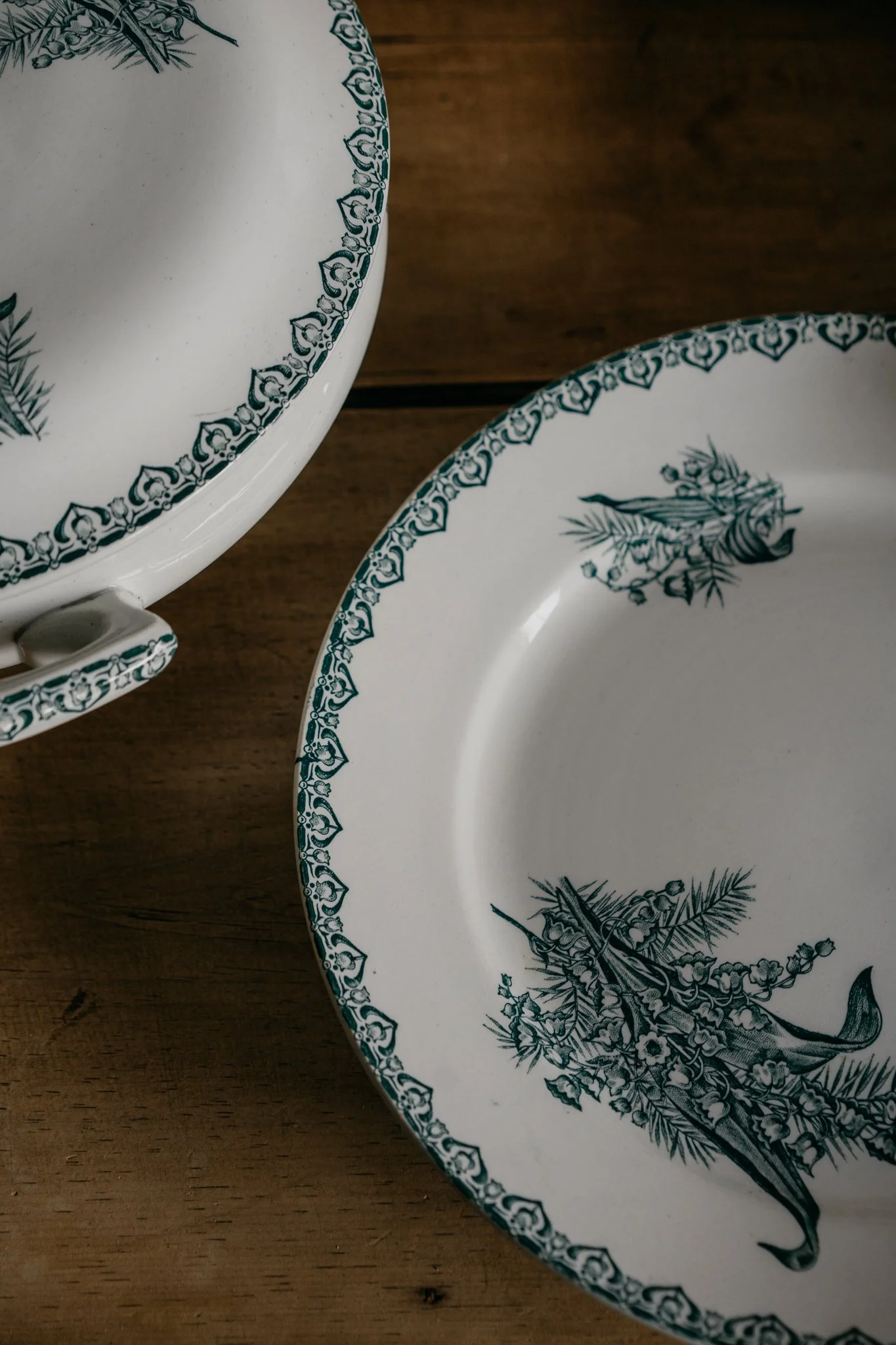
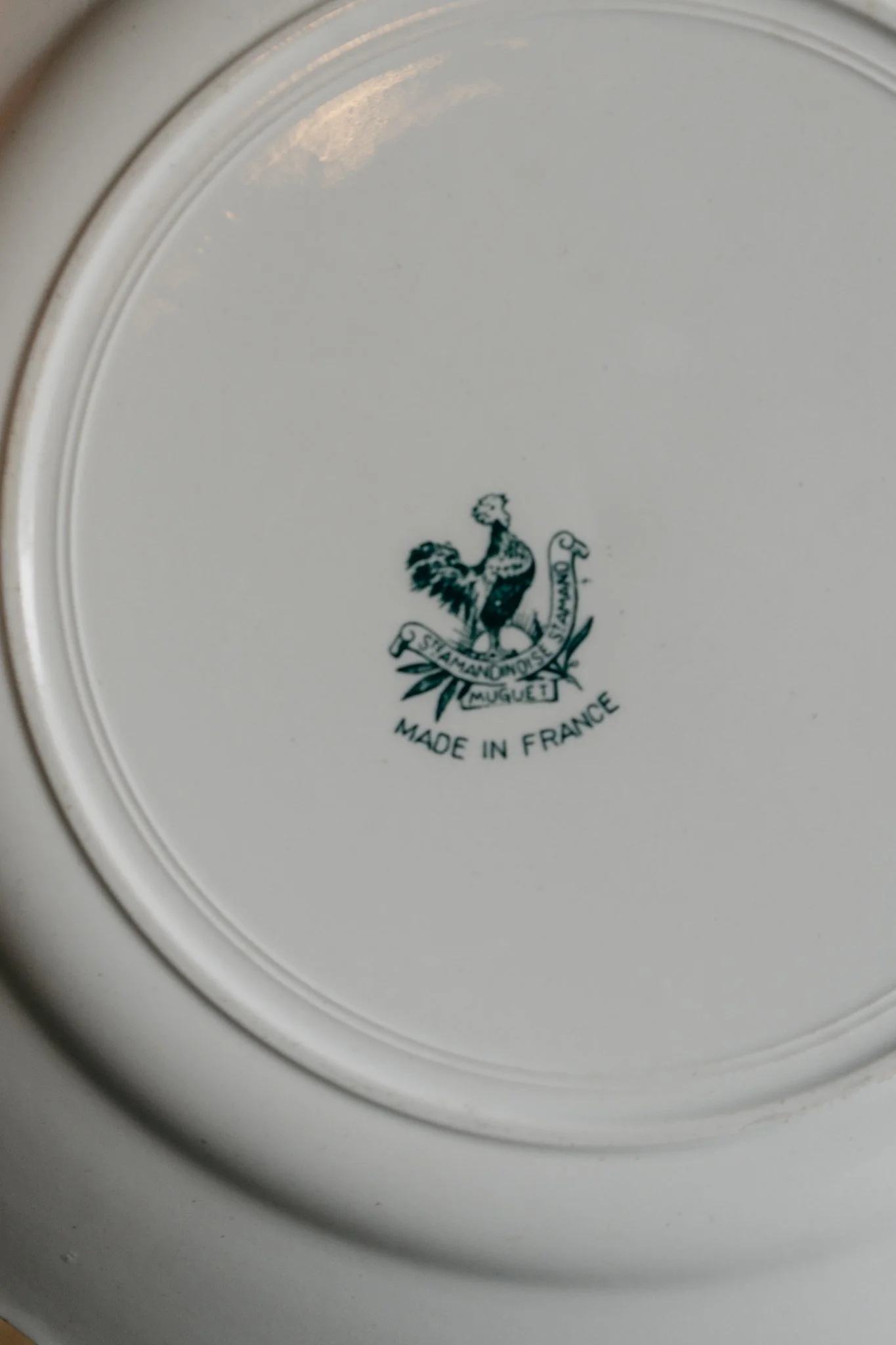
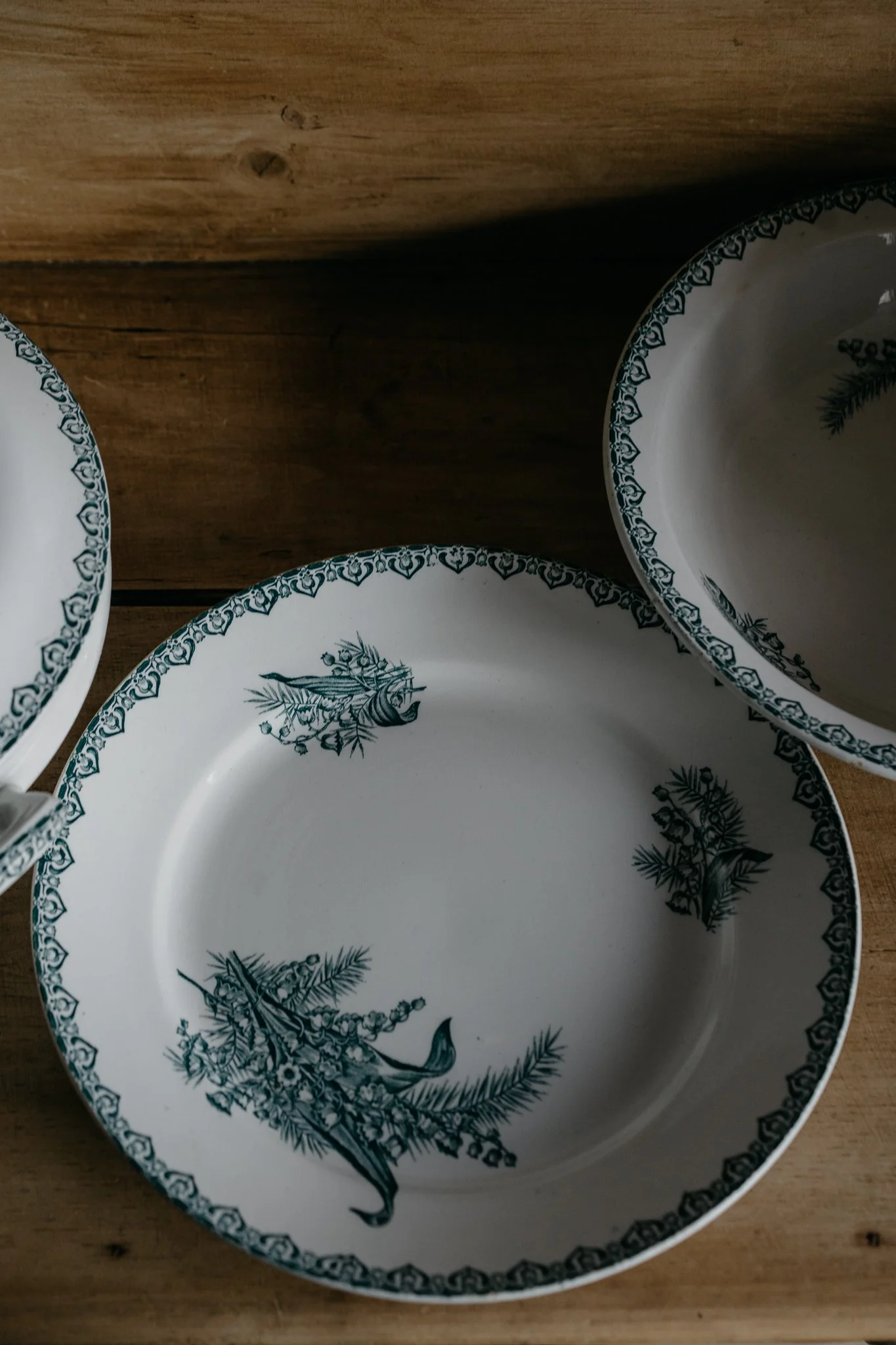
A slice of French dining history, this beautiful lidded tureen is decorated in the Miguet pattern by the celebrated Saint-Amand pottery of northern France.
The soft green transfer decoration has such a lovely old-world quality, with its delicate botanical motifs bringing a gentle touch of colour to the creamy earthenware. There is something particularly appealing about these early French table pieces, made for everyday family dining yet possessing a decorative beauty that has allowed them to remain treasured long after their original purpose.
Produced in the late 19th to early 20th century, the Miguet pattern reflects the enduring French tradition of finely decorated tableware. The deep, generous bowl and beautifully fitted lid were intended for serving soups, vegetables and other dishes at the family table, keeping everything warm until it was ready to be shared.
Today, I can imagine it looking quite at home on an old farmhouse table, amongst antique linens and collected French pottery, or simply displayed on open shelving where its lovely green pattern can be admired.
A timeless piece of French earthenware, with a little of the romance of a country kitchen and the beauty of things made for everyday living.
Pattern: Miguet
Maker: Saint-Amand-les-Eaux, France.
Period: Late 19th to early 20th century.

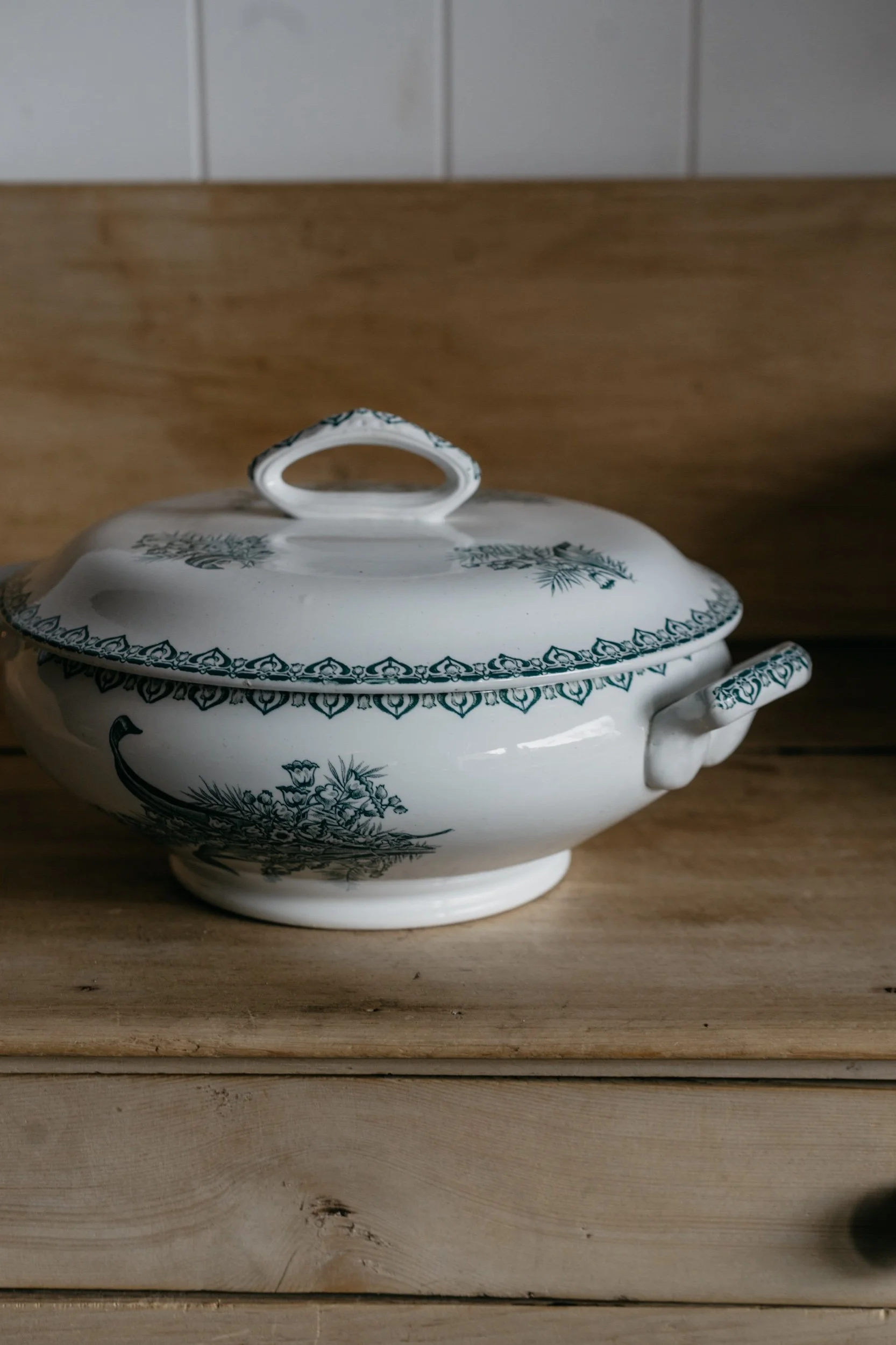 Image 1 of 9
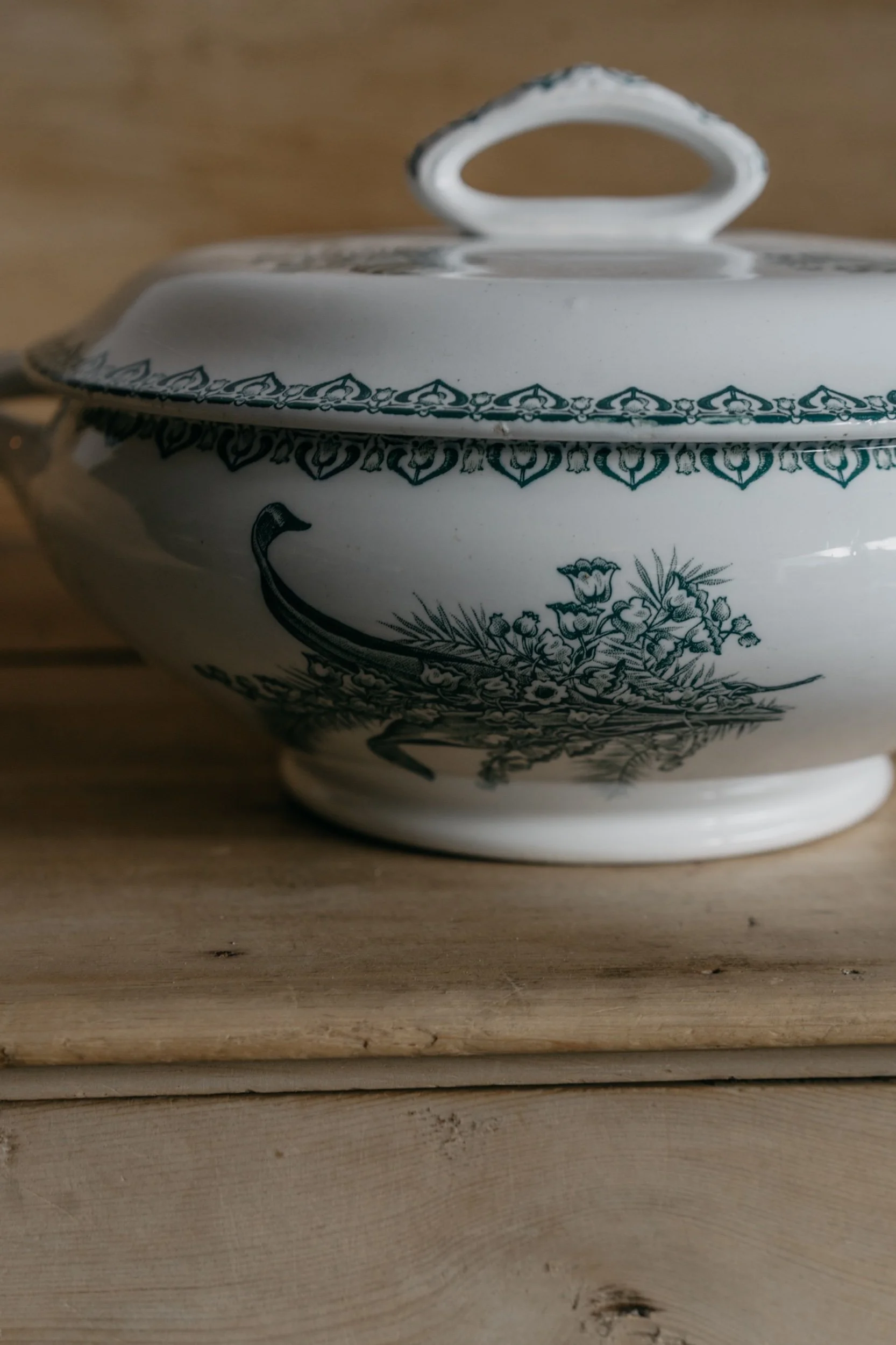 Image 2 of 9
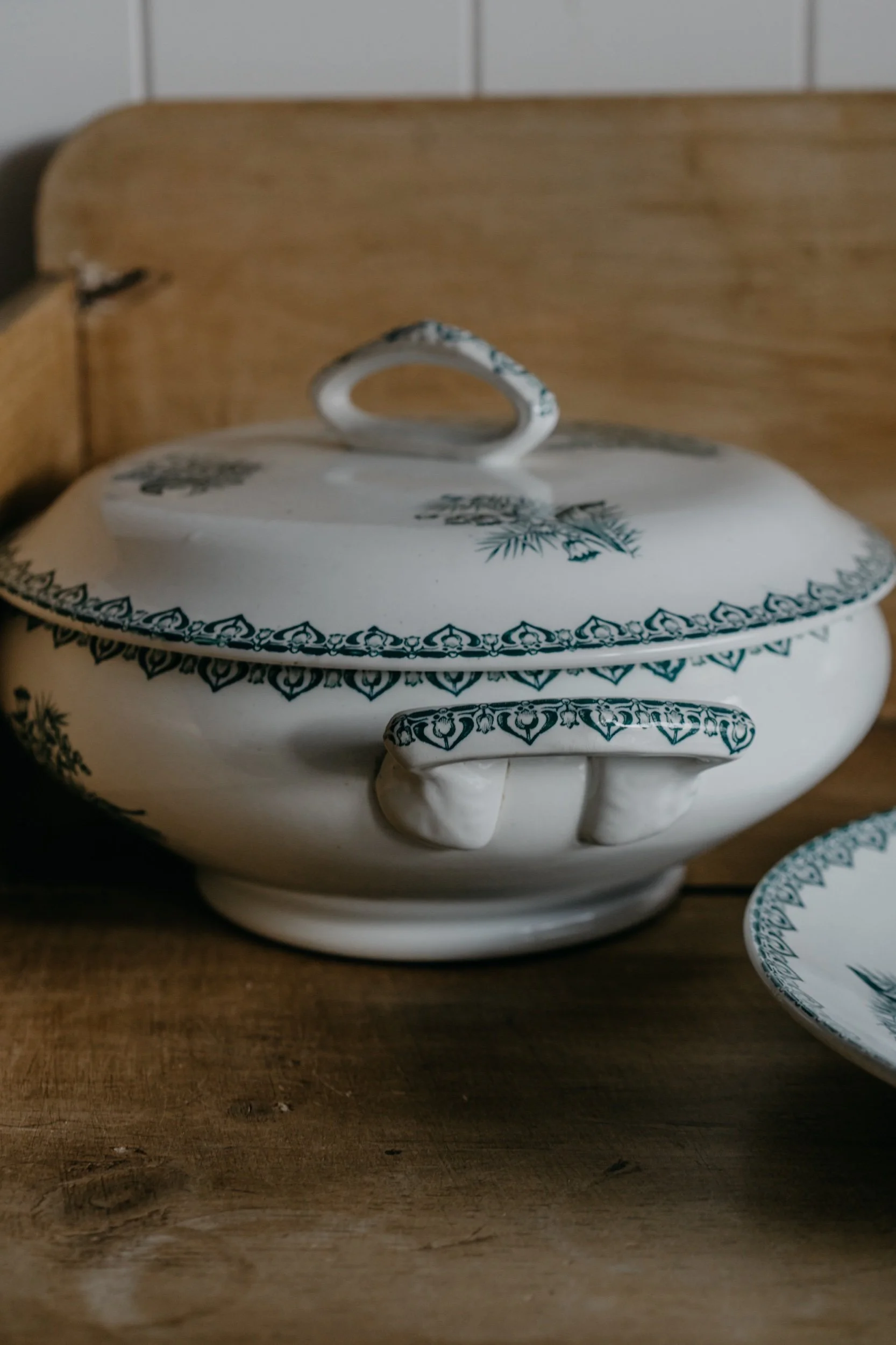 Image 3 of 9
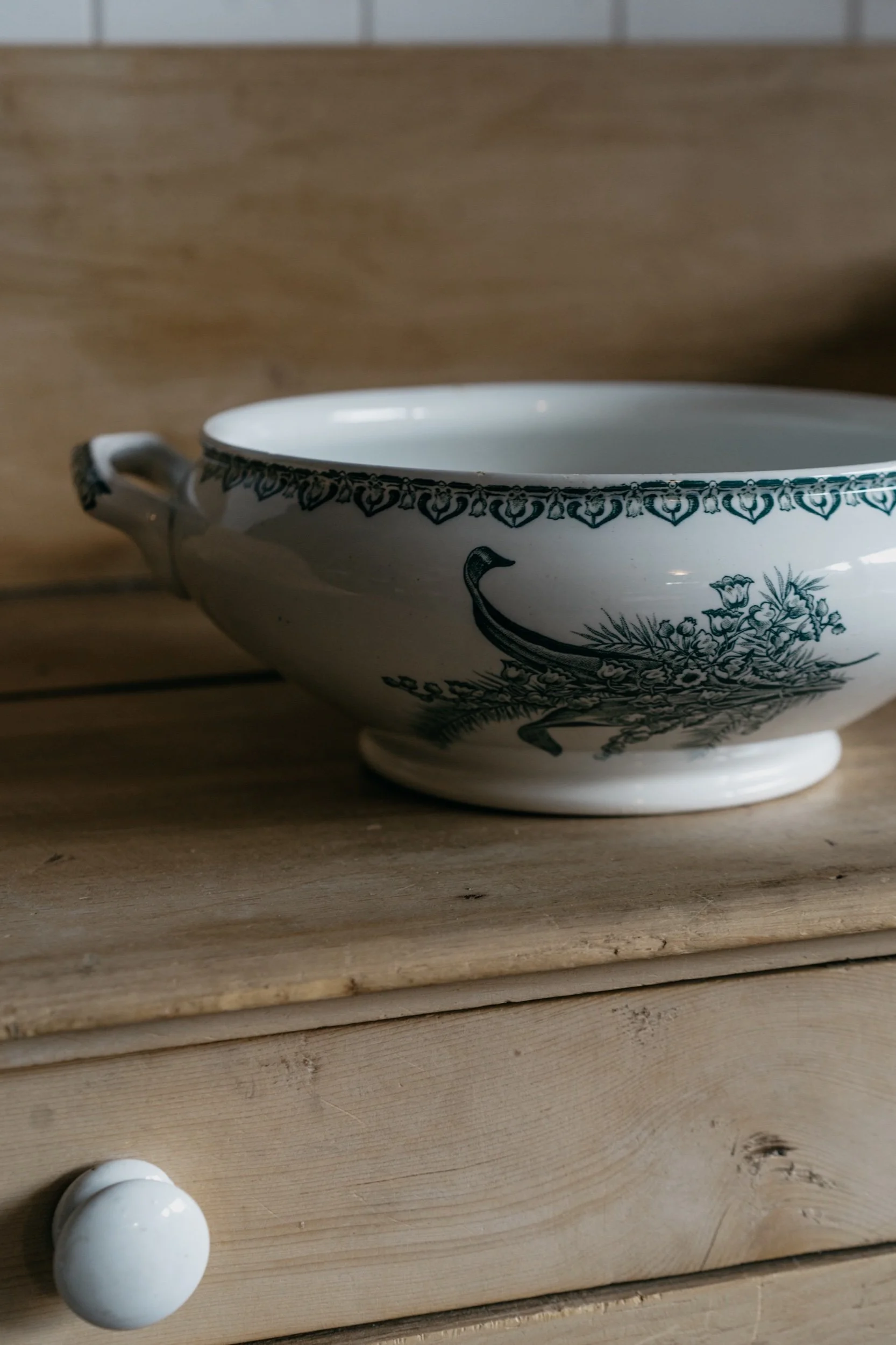 Image 4 of 9
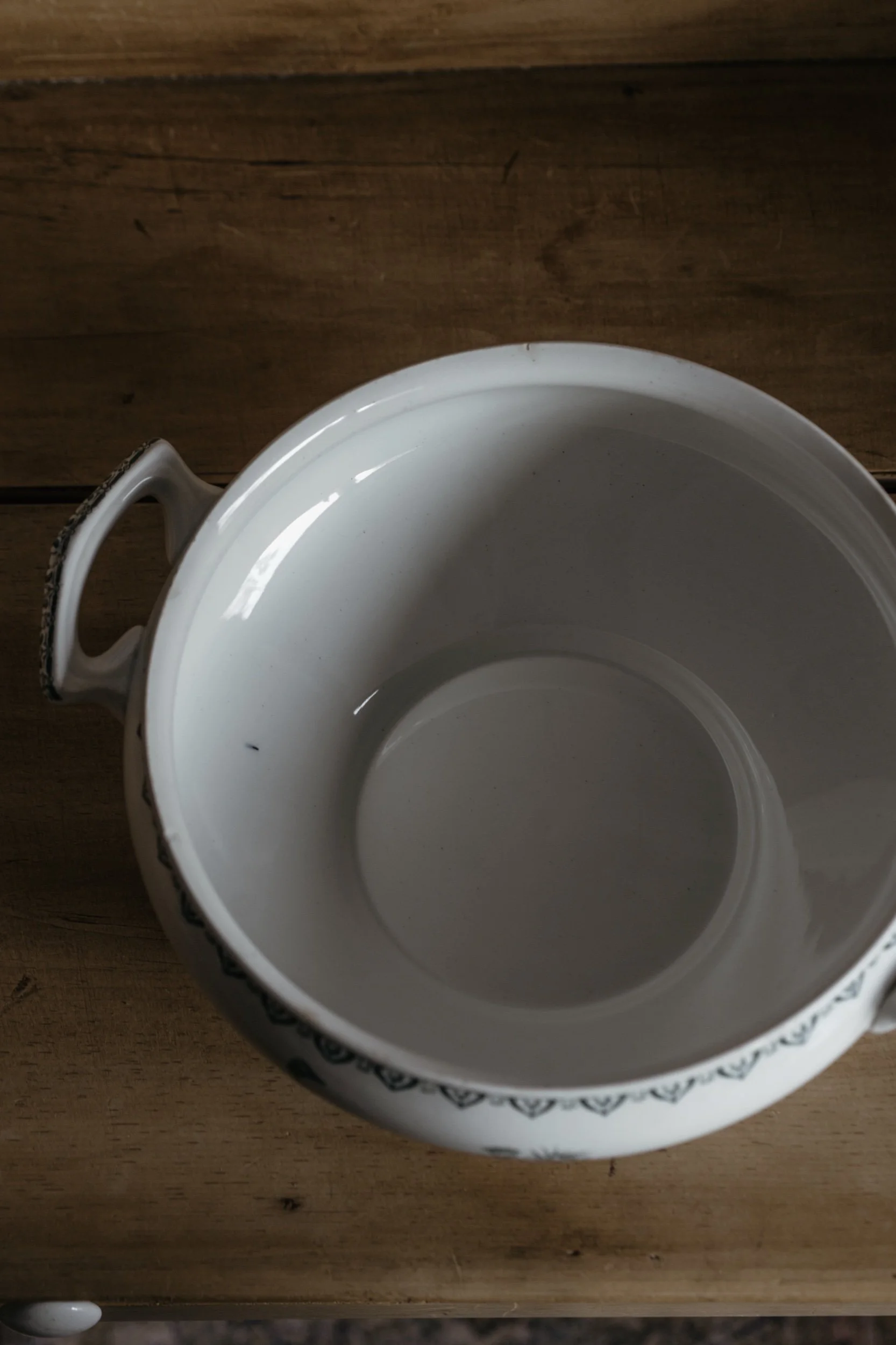 Image 5 of 9
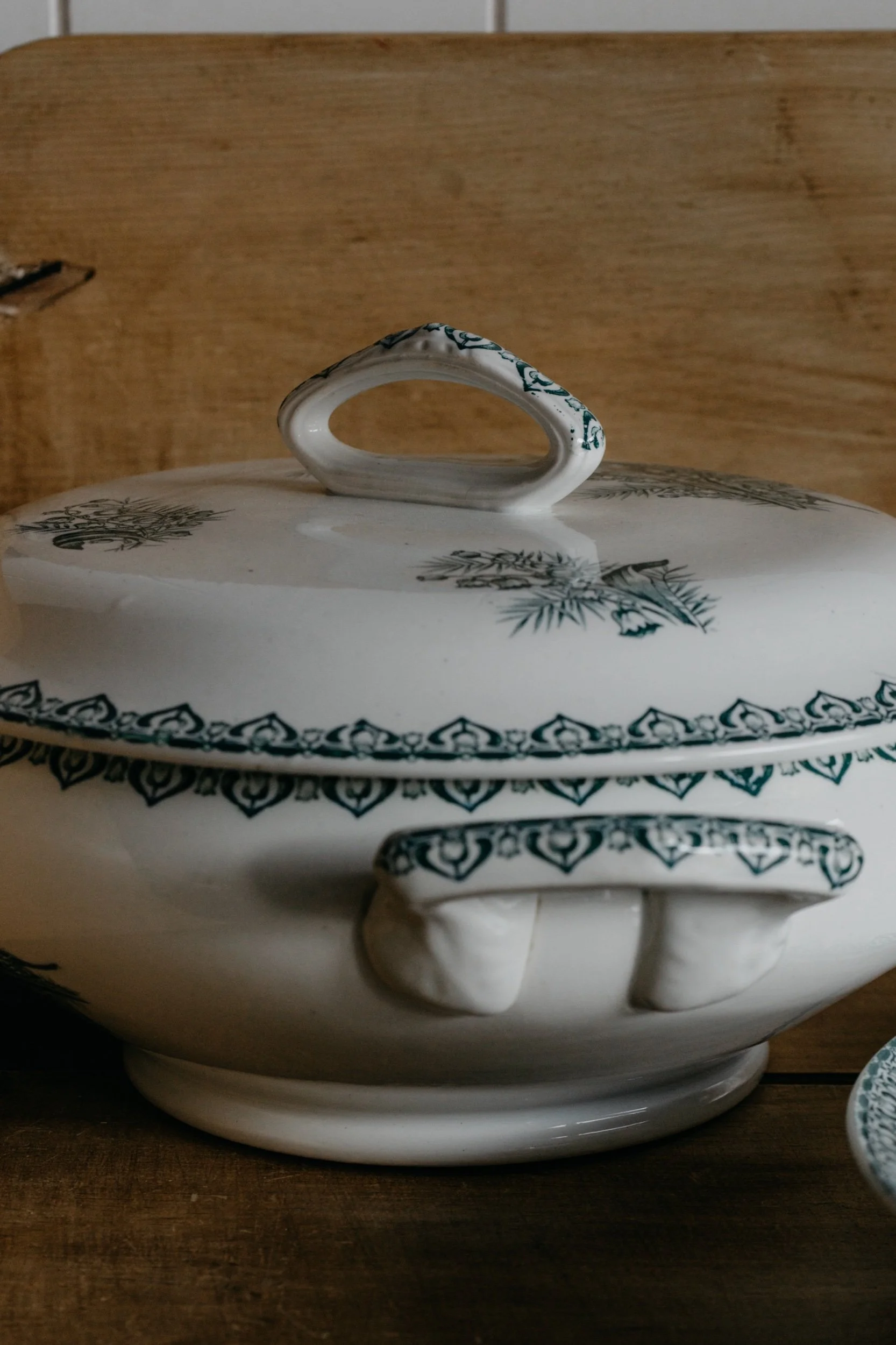 Image 6 of 9
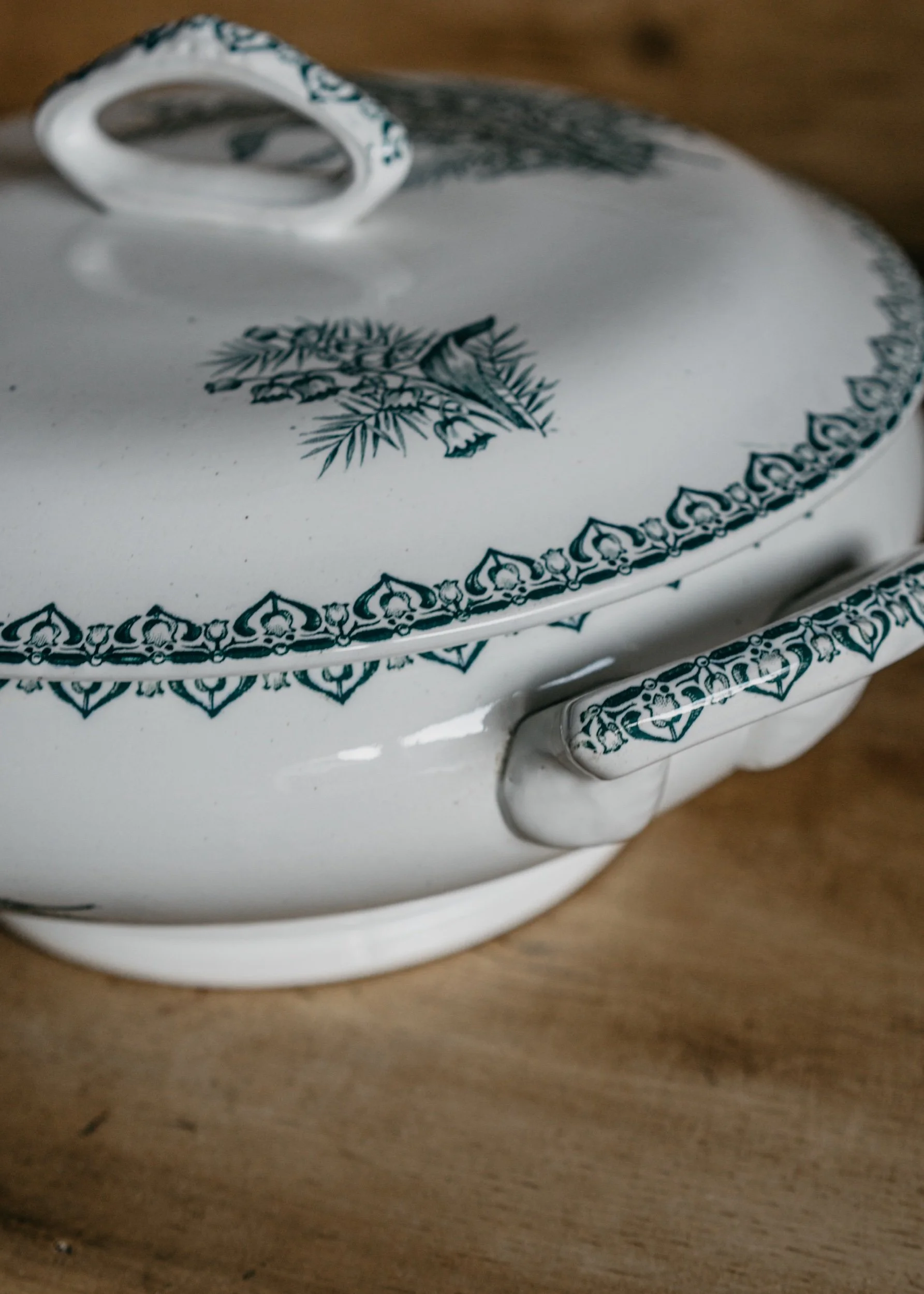 Image 7 of 9
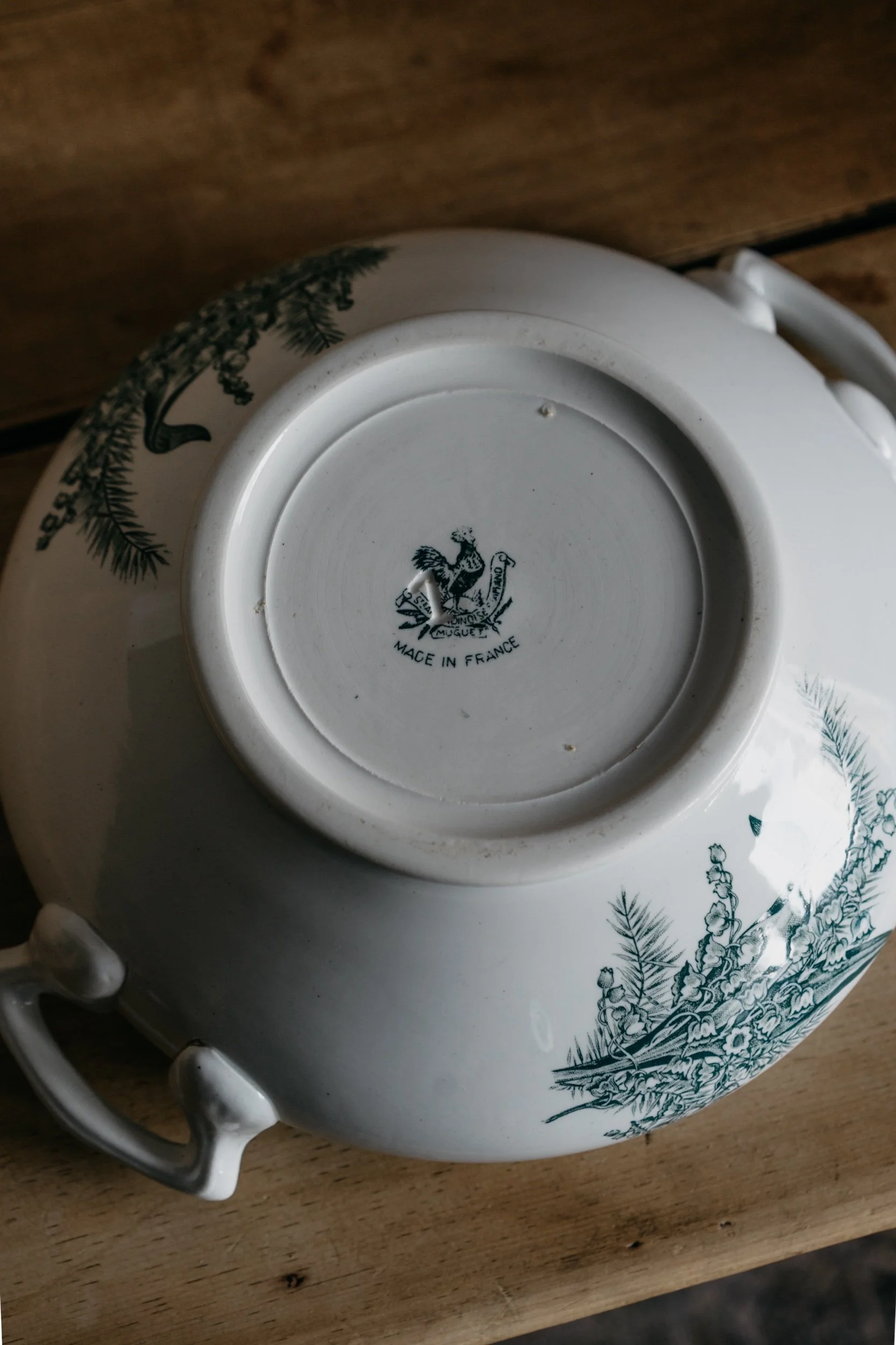 Image 8 of 9
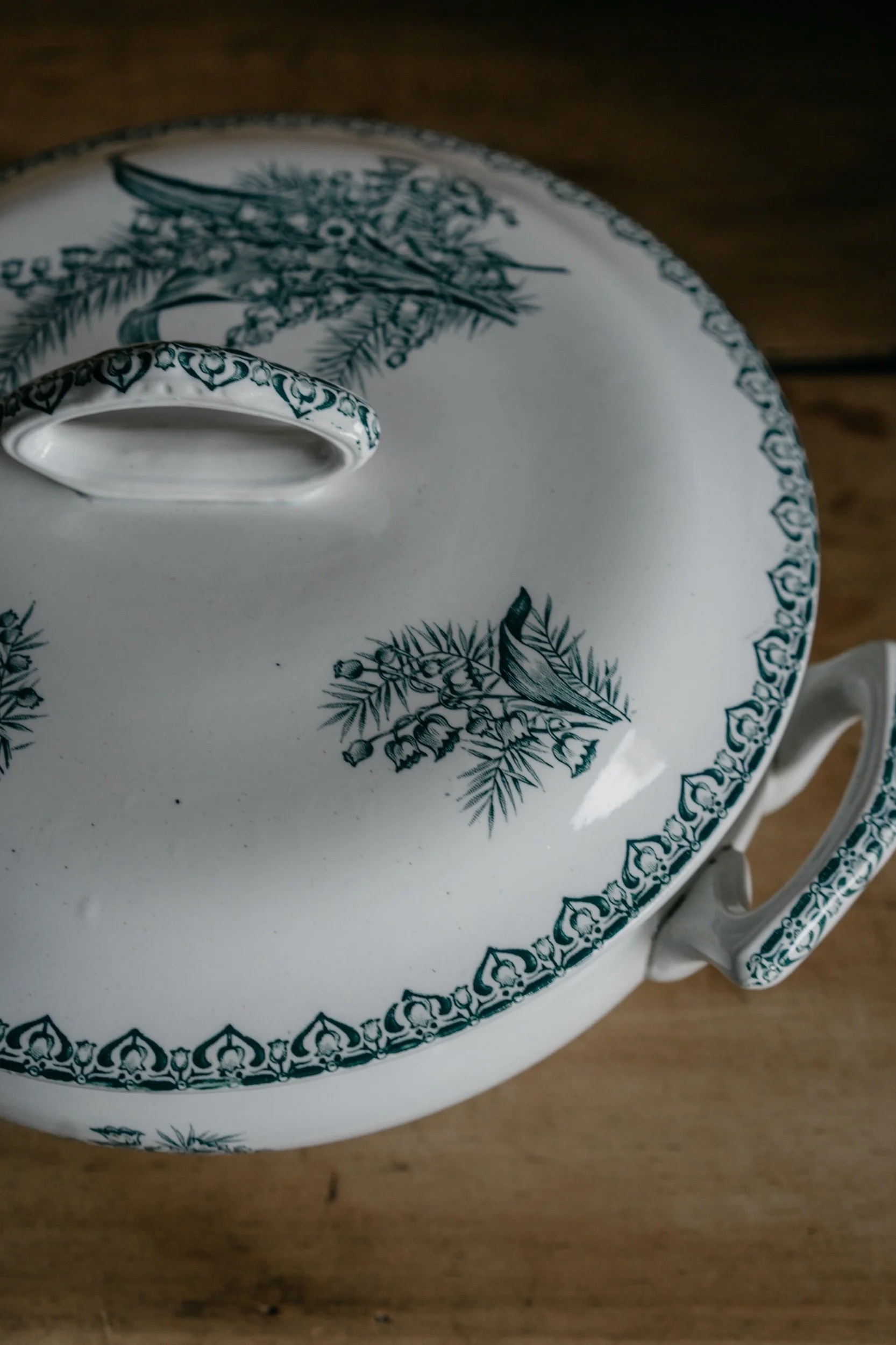 Image 9 of 9