Image 1 of 2
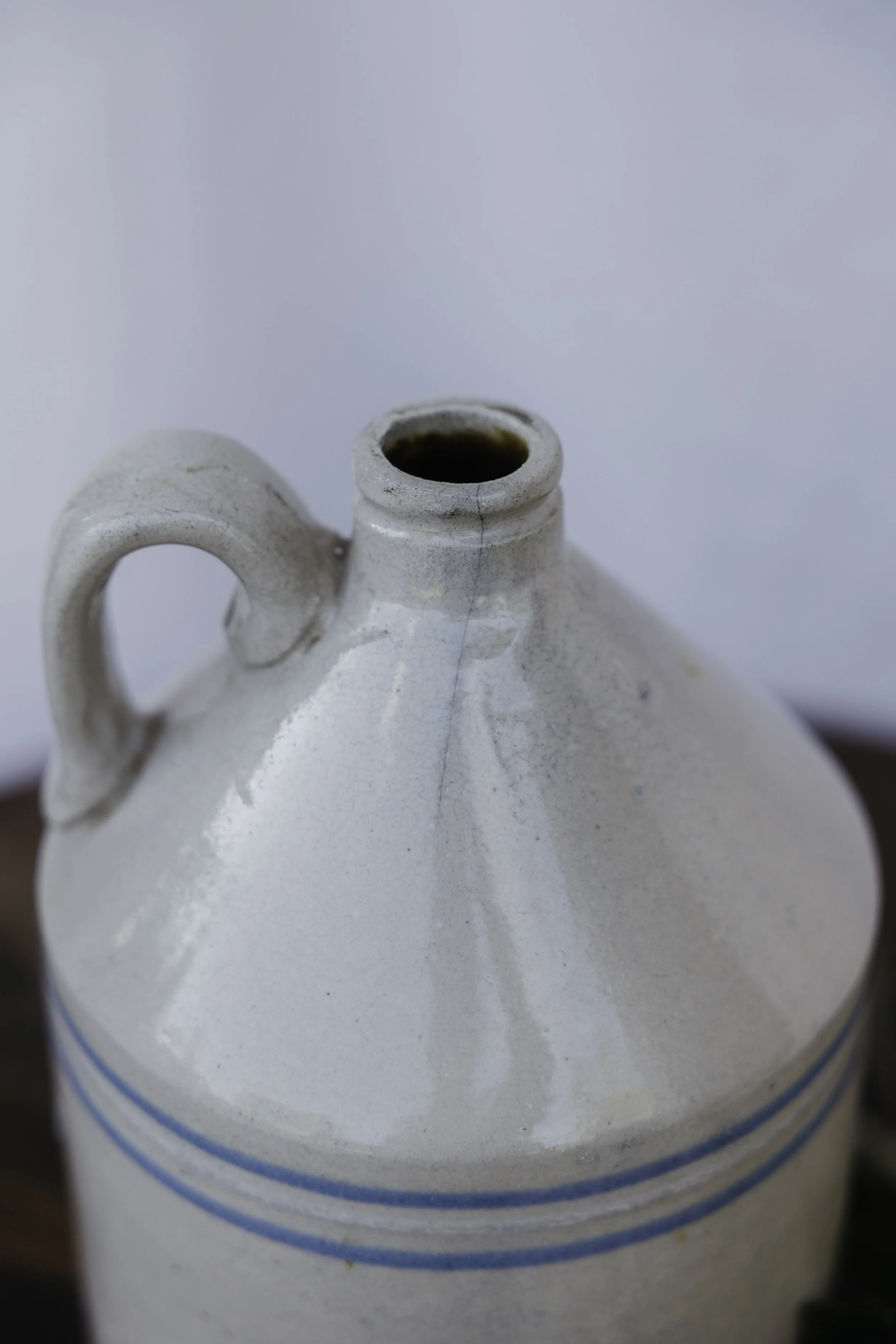 Image 2 of 2
Stoneware jugs like this were common utilitarian items produced in the United States from the mid‑19th century through the early 20th century. Crafted for everyday use, they stored and transported liquids—water, milk, cider, and spirits—then were tucked into kitchens, cellars, and wagons.
The hallmark blue bands (often called “blue stripes” or “blue bands”) were a popular decorative touch. Applied during glazing with cobalt oxide, these bands added a simple, durable ornamentation that also helped identify regional styles and individual potteries. Variations in hue, thickness, and band placement give each piece character and make them appealing to collectors.
Potteries across the country—particularly in Ohio, Pennsylvania, and New Jersey—produced these jugs in a range of sizes and forms, from squat one‑gallon crocks to tall, narrow flagons. Notable makers such as Robinson Clay Products Co. and Sherwood Bros. became known for consistent shapes and recognizable glazing techniques. Many workshops mixed functional design with modest decoration, creating objects meant to be used daily yet valued for their honest craftsmanship.
Today these stoneware jugs are prized for their rustic charm and historical resonance. They work beautifully as functional vessels in a slow‑living home or as sculptural accents in farmhouse and country‑style décor—filled with dried stems or standing alone on a mantel, they bring a sense of provenance and quiet beauty to a room. For collectors, maker’s marks, the quality of the cobalt banding, and the jug’s condition all factor into desirability and value; for decorators, it’s the worn glaze, imperfect lines, and earthy presence that make them timeless.
Dimensions
Height: 12 ½
Opening: 1 ¾ in
Diameter: 6 ½ in.
*The photo may slightly different from actual item in terms of colour due to the lighting during photo shooting or the monitor's display. All sales on vintage items are final.
Stoneware jugs like this were common utilitarian items produced in the United States from the mid‑19th century through the early 20th century. Crafted for everyday use, they stored and transported liquids—water, milk, cider, and spirits—then were tucked into kitchens, cellars, and wagons.
The hallmark blue bands (often called “blue stripes” or “blue bands”) were a popular decorative touch. Applied during glazing with cobalt oxide, these bands added a simple, durable ornamentation that also helped identify regional styles and individual potteries. Variations in hue, thickness, and band placement give each piece character and make them appealing to collectors.
Potteries across the country—particularly in Ohio, Pennsylvania, and New Jersey—produced these jugs in a range of sizes and forms, from squat one‑gallon crocks to tall, narrow flagons. Notable makers such as Robinson Clay Products Co. and Sherwood Bros. became known for consistent shapes and recognizable glazing techniques. Many workshops mixed functional design with modest decoration, creating objects meant to be used daily yet valued for their honest craftsmanship.
Today these stoneware jugs are prized for their rustic charm and historical resonance. They work beautifully as functional vessels in a slow‑living home or as sculptural accents in farmhouse and country‑style décor—filled with dried stems or standing alone on a mantel, they bring a sense of provenance and quiet beauty to a room. For collectors, maker’s marks, the quality of the cobalt banding, and the jug’s condition all factor into desirability and value; for decorators, it’s the worn glaze, imperfect lines, and earthy presence that make them timeless.
Dimensions
Height: 12 ½
Opening: 1 ¾ in
Diameter: 6 ½ in.
*The photo may slightly different from actual item in terms of colour due to the lighting during photo shooting or the monitor's display. All sales on vintage items are final.