 Image 1 of 3
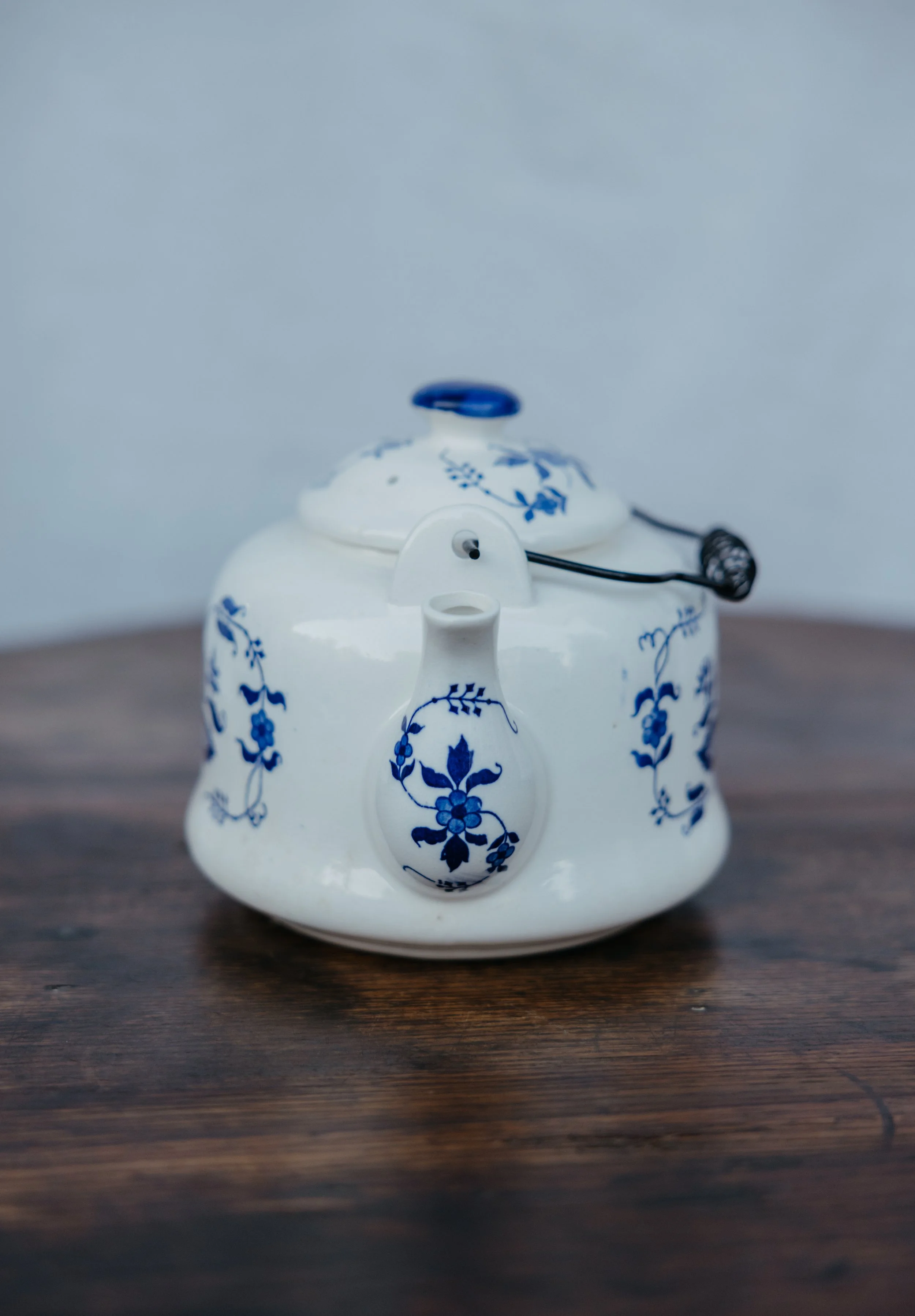 Image 2 of 3
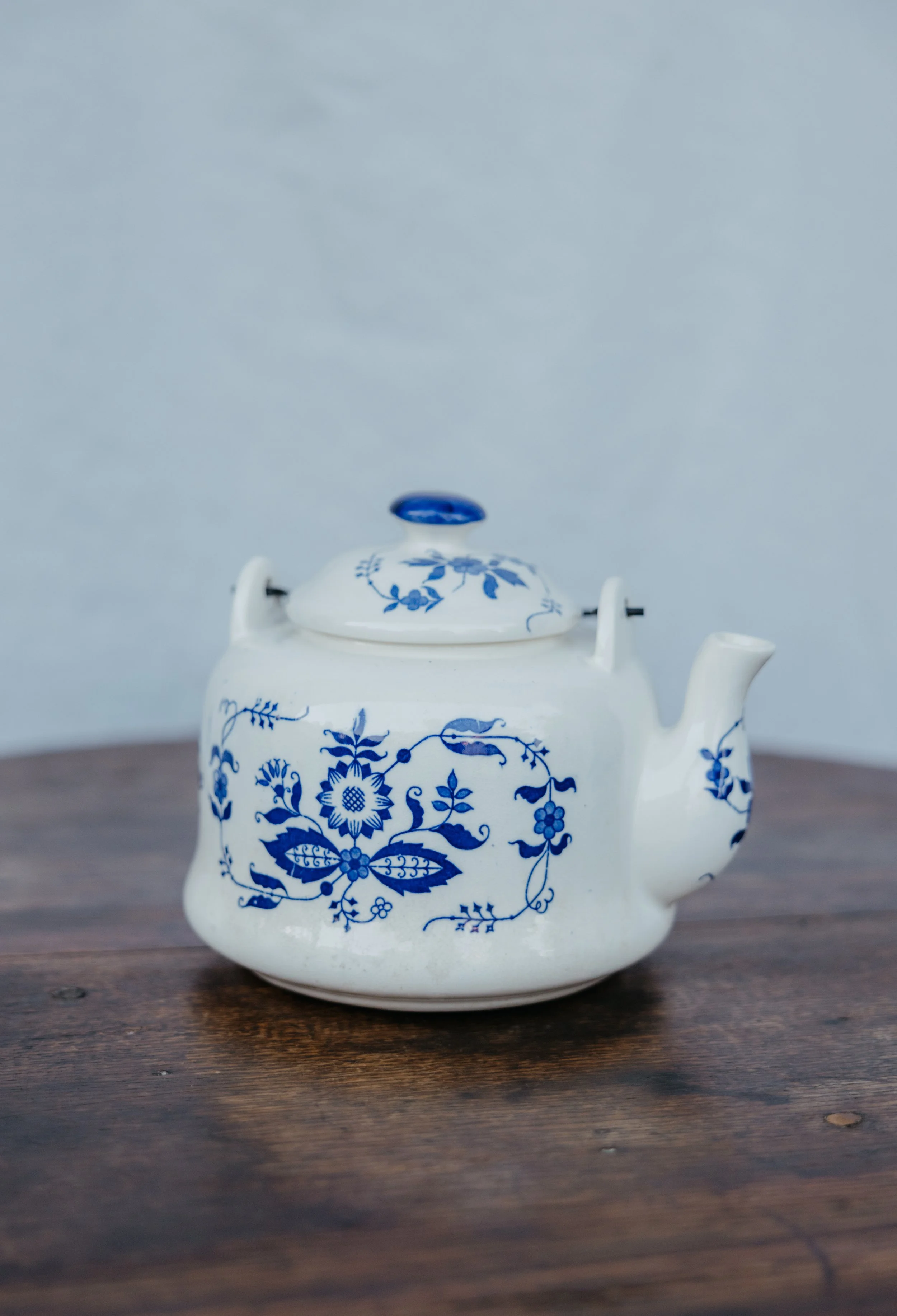 Image 3 of 3
The Blue Onion pattern — despite its name — does not depict onions at all but a stylized mix of pomegranates, peaches, and peonies, first developed at the Meissen porcelain factory in the 1730s. Its elegant cobalt-blue motifs became one of the most widely imitated designs in Europe and beyond, coming to symbolize traditional European tableware. Many makers produced their own takes on the pattern, often labeled "
The Blue Onion pattern, despite its name, doesn’t show onions at all but a stylized mix of pomegranates, peaches, and peonies. Born at the Meissen porcelain factory in the 1730s, the motif quickly became a hallmark of traditional European tableware and was widely copied across the continent and beyond. Many manufactories created their own takes, labeled “Blue Danube” or simply “Blue Onion,” making the design both prestigious and ubiquitous.
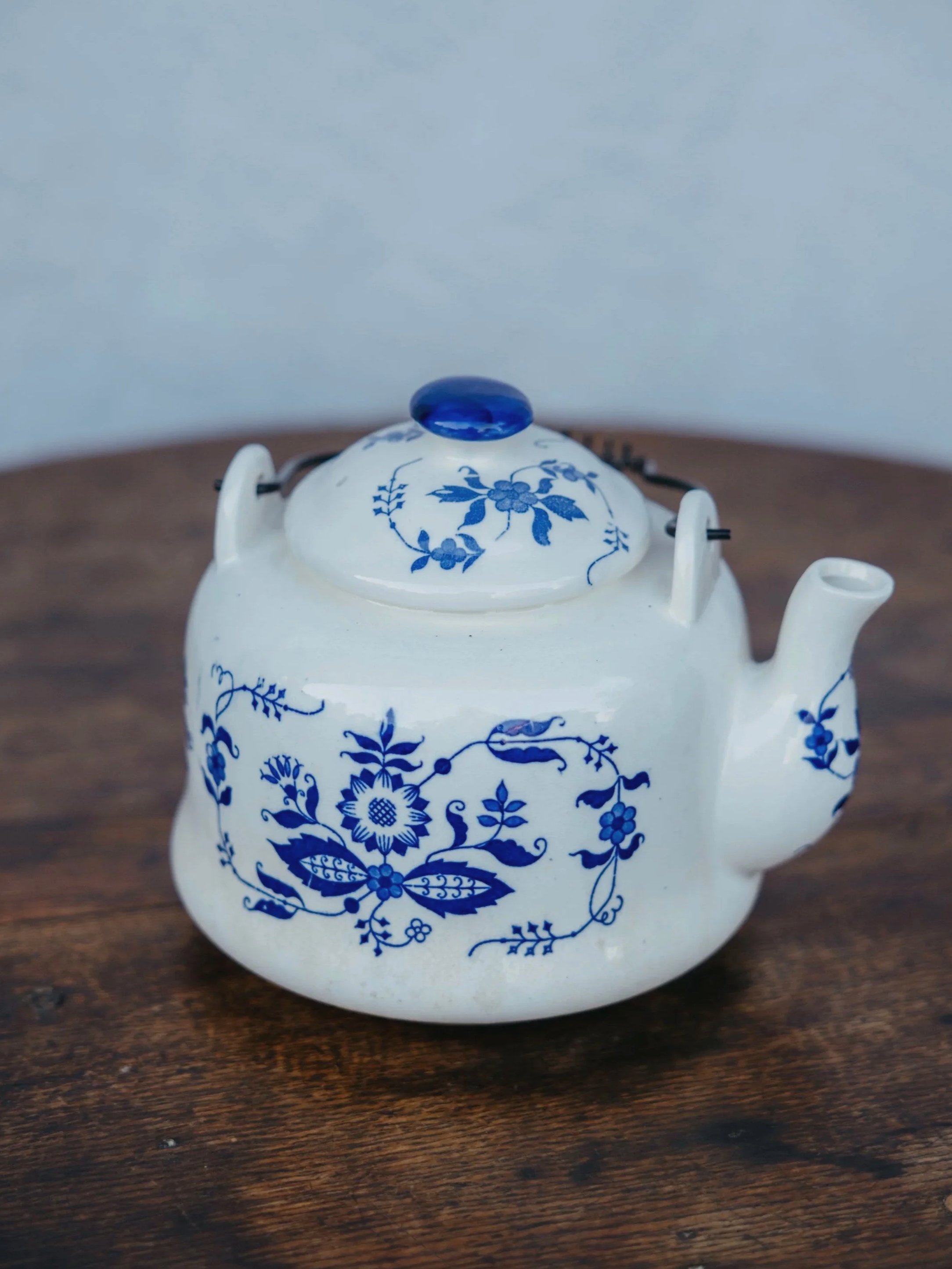
This teapot, with its metal handle and crisp blue floral transferware, sits squarely in that long tradition. While Meissen’s originals were fine porcelain for the highest tables, mass-produced versions like this one, often made in mid‑20th‑century Japan, were common everyday pieces and decorative keepsakes. It’s a lovely example of how a historic pattern traveled through time and trade to become part of ordinary, cherished rituals.
Dimensions
Height: 6 in
Width: 6 ½ in
*The photo may slightly different from actual item in terms of colour due to the lighting during photo shooting or the monitor's display. All sales on vintage items are final.
The Blue Onion pattern — despite its name — does not depict onions at all but a stylized mix of pomegranates, peaches, and peonies, first developed at the Meissen porcelain factory in the 1730s. Its elegant cobalt-blue motifs became one of the most widely imitated designs in Europe and beyond, coming to symbolize traditional European tableware. Many makers produced their own takes on the pattern, often labeled "
The Blue Onion pattern, despite its name, doesn’t show onions at all but a stylized mix of pomegranates, peaches, and peonies. Born at the Meissen porcelain factory in the 1730s, the motif quickly became a hallmark of traditional European tableware and was widely copied across the continent and beyond. Many manufactories created their own takes, labeled “Blue Danube” or simply “Blue Onion,” making the design both prestigious and ubiquitous.
This teapot, with its metal handle and crisp blue floral transferware, sits squarely in that long tradition. While Meissen’s originals were fine porcelain for the highest tables, mass-produced versions like this one, often made in mid‑20th‑century Japan, were common everyday pieces and decorative keepsakes. It’s a lovely example of how a historic pattern traveled through time and trade to become part of ordinary, cherished rituals.
Dimensions
Height: 6 in
Width: 6 ½ in
*The photo may slightly different from actual item in terms of colour due to the lighting during photo shooting or the monitor's display. All sales on vintage items are final.